A home gym cable machine typically sticks due to insufficient lubrication, dirt and debris buildup, or misaligned components. Addressing these issues often involves cleaning the guide rods and pulleys, applying appropriate silicone-based or PTFE lubricants, and checking for proper cable routing and tightened connections. Most sticking problems can be resolved with simple maintenance, restoring smooth operation within 15-30 minutes.
Understanding Your Home Gym Cable Machine
A home gym cable machine is a sophisticated piece of equipment designed to provide versatile resistance training. At its core, it consists of a weight stack, cables, and a series of pulleys. The cables connect the weight stack to various handles and attachments, running through multiple pulleys that guide the path of resistance. Guide rods ensure the weight stack moves smoothly up and down, while selector pins allow you to adjust the desired resistance. All these components must work in harmony to deliver a friction-free workout experience. When any part of this system falters, it can manifest as a sticky or jerky movement, signaling that your machine needs some attention.
Common Reasons Your Cable Machine Gets Sticky
Identifying the root cause of a sticky cable machine is the first step towards a solution. Several factors can contribute to this common problem, ranging from simple maintenance oversights to more significant wear and tear.
Lack of Lubrication
The most frequent culprit behind a sticky cable machine is insufficient lubrication. Moving parts such as guide rods, pulleys, and even the cables themselves require a smooth, low-friction surface to operate correctly. Over time, lubricants can dry out, wear away, or become contaminated, leading to increased friction that causes jerky or resistant movement. This is particularly noticeable on the weight stack’s guide rods, where the individual weight plates slide up and down.
Dirt and Debris Buildup
Your home gym, like any frequently used space, can accumulate dust, dirt, and even sweat. These particles can settle on the guide rods, collect within pulley grooves, or build up on the cables. This grime acts as an abrasive, increasing friction and making movements feel sticky, jumpy, or resistant. A visibly dirty guide rod or a gritty-sounding pulley is a clear indicator of this problem.
Misaligned Pulleys or Cables
The intricate routing of cables through a series of pulleys is crucial for proper function. If a cable is not routed correctly according to the manufacturer’s diagram, or if a pulley becomes misaligned, it can cause the cable to veer out of its groove. This misalignment creates excess friction, can lead to the cable getting caught, or even cause it to fray prematurely. Symptoms often include jerky movement or the cable visibly jumping off the pulley track.
Worn or Damaged Components
|
Our Picks for the Best Home Gym in 2026
As an Amazon Associate I earn from qualifying purchases.
|
||
| Num | Product | Action |
|---|---|---|
| 1 | Adjustable dumbbell set,20/35/45/55/70/90lbs Free Weights set with upgraded nut, 5 in 1 Weight Set Used as Kettlebells, Barbell, Push up Stand, Fitness Exercise for Home Gym Suitable Men/Women |

|
| 2 | 6-Tier Home Gym Storage Rack with Wheels, Dumbbell Weight Rack and Yoga Mat Organizer, Multi-Purpose Gym Equipment Storage Stand for Home Gym Accessories |
|
| 3 | TRX All-In-One Home Gym System – Complete Suspension Training Kit for Strength Training, HIIT & Full-Body Workouts at Home or Outdoors, Includes Indoor & Outdoor Anchors |
|
| 4 | VINSGUIR Ab Roller Wheel, Abs & Core Workout Equipment for Home Gym with Knee Pad Accessories, Abdominal Wheel for Full-body Strength Training |
|
| 5 | Yoleo Adjustable Weight Bench for Full Body Workout; Foldable Bench Press Bench of Home Gym Strength Training; Incline Decline Flat Utility Workout Bench with Quick Folding& Fast Adjustment (Black) |
|
| 6 | MQRW Push Up Board,Home Gym,Portable Exercise Equipment,Pilates Bar and 20 Fitness Accessories with Resistance Bands and Ab Roller Wheel,Full Body Workout at Home |
|
| 7 | Resistance Bands for Working Out, 5-Pack Elastic Loop Exercise Bands for Strength Training Stretching, Home Gym Equipment for Pilates Yoga Physical Therapy, Leg Glute Arm Workout Kit for Women Men |
|
| 8 | Sunny Health & Fitness Mini Stepper for Exercise at Home, Stair Step Workout Machine with Resistance Band and Over 300lb Weight Capacity, Optional Twist Motion and Free SunnyFit App Connection |
|
| 9 | Ally Peaks Pull Up Bar for Doorway | Thickened Steel Max Limit 440 lbs Upper Body Fitness Workout Bar| Multi-Grip Strength for Doorway | Indoor Chin-Up Bar Fitness Trainer for Home Gym Portable |
|
| 10 | Adjustable Ropeless Battle Ropes for Home Gym for Men & Women,Adjustable Weights Cordless Battle Ropes with Storage Bag,Multifunctional Strength Training for Home & Gym |
|
Even with proper maintenance, components can wear out over time. Pulleys contain bushings that can degrade, leading to play or sticking. Cables, especially under heavy use, can fray, kink, or develop permanent bends, which cause them to catch as they pass through pulleys. Weight selector pins can also bend or wear down, making them difficult to insert smoothly or causing them to stick.
Loose Connections
Over time, the nuts and bolts that hold your cable machine’s frame and components together can loosen due to vibrations and repeated use. Loose connections can lead to instability, misalignment of parts, and an increase in friction points. This can cause the machine to feel wobbly or the cable system to bind, resulting in a sticky or uneven pull during exercises.
Corrosion
Metal parts, particularly the guide rods and selector pins, can be susceptible to rust and corrosion, especially in humid environments. Rust creates a rough surface that significantly increases friction, causing weights to stick, pins to jam, and overall resistance to become inconsistent. This is often accompanied by a grinding sound or visible rust stains.
Kinks in Cables
Sometimes, the cables themselves might develop a permanent bend or kink. This can happen from improper handling, excessive force, or repeated rubbing against a sharp edge. When a kinked section of cable reaches a pulley, it can catch, causing an abrupt stop or a sticky sensation as it tries to pass through. This issue is usually visible upon close inspection of the cable’s length.
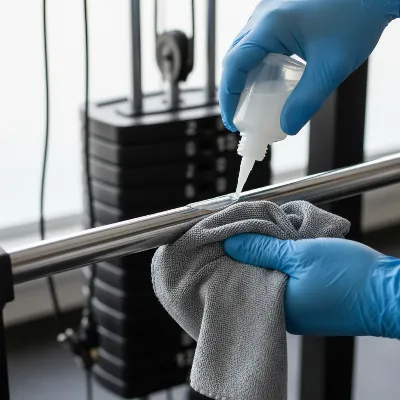 A person applying lubricant to the guide rods of a home gym cable machine.
Quick Fixes to Get Your Machine Running Smoothly
Once you’ve identified the potential culprits behind your sticky cable machine, it’s time to implement some quick and effective solutions. Most issues can be resolved with a few simple maintenance steps, saving you the hassle and cost of professional repair.
Cleanliness is Key
A significant portion of sticking issues can be resolved by simply cleaning your equipment. Start by wiping down the chrome guide rods that the weight stack slides on. Use a clean, lint-free cloth to remove any accumulated dust, dirt, or dried lubricant. For pulleys, inspect the grooves for any embedded grime or debris and carefully clean them out. This step alone can often dramatically improve the smoothness of movement.
The Right Lubricant for the Right Part
Lubrication is often the fastest way to alleviate sticking. However, using the correct type of lubricant is crucial to avoid further damage.
- For Guide Rods: Apply a silicone-based lubricant or a synthetic grease like Super Lube. These are ideal for the metal-on-plastic friction points of weight plates sliding on guide rods. Apply sparingly to a clean cloth and wipe it evenly along the entire length of the guide rods. Avoid spraying directly, as this can lead to over-lubrication and attract more dust. Do not use WD-40 on guide rods, as it can be a solvent and attract dirt, worsening the problem over time.
- For Pulleys: Silicone spray or PTFE (Teflon) lubricants work best for pulleys. These help reduce friction where the cable meets the pulley wheel. Apply a small amount directly to the pulley’s axle and spin the pulley a few times to work the lubricant in. Ensure you target any bushings or bearings within the pulley housing.
- For Selector Pins: A light application of 3-in-1 oil or silicone spray can help a sticky selector pin slide more easily. Apply a tiny amount to the pin and work it in.
Inspect and Realign
Carefully examine your cable machine’s setup. Refer to your owner’s manual or a diagram to ensure all cables are routed correctly through every pulley. Misrouted cables are a common cause of friction. Also, check each pulley to ensure it’s sitting squarely in its mount and rotates freely without wobbling or binding. Sometimes, a slight adjustment to a pulley’s position can make a big difference.
Check and Tighten
Perform a thorough check of all nuts, bolts, and fasteners throughout your cable machine. Use a wrench or appropriate tool to gently tighten any connections that feel loose. Pay particular attention to the points where cables attach, where pulleys are mounted, and the main frame connections. Ensuring everything is snug will improve stability and reduce unforeseen friction points.
Assess Cable and Pulley Condition
With the machine clean and partially lubricated, carefully run your fingers along the entire length of each cable, feeling for any fraying, kinks, or rough spots. Even minor damage can cause sticking. Similarly, inspect pulleys for cracks, excessive wear on the grooves, or signs of the internal bushings breaking down. If a cable is significantly frayed or a pulley is cracked and no longer rotates smoothly, replacement is often the safest and most effective solution. Addressing these issues early prevents further damage and ensures safety during your workouts.
Preventative Maintenance for Long-Term Smoothness
Keeping your home gym cable machine running smoothly doesn’t just involve fixing problems as they arise; it requires a proactive approach to maintenance. Regular care can prevent most sticking issues and significantly extend the lifespan of your equipment.
Regular Cleaning
Make it a habit to wipe down the guide rods and exposed cables with a clean, dry cloth after each workout. This removes sweat, dust, and any light grime before it can build up and cause issues. Periodically, perform a more thorough cleaning, reaching into pulley grooves and other less accessible areas with a brush or damp cloth to remove accumulated debris. A clean machine is a happy machine, less prone to friction and sticking.
Scheduled Lubrication
Consistent lubrication is vital. While usage levels vary, a good general guideline is to lubricate the guide rods and pulleys every 2-6 months. For high-traffic home gyms or those in dusty environments, leaning towards the shorter end of that spectrum is advisable. Always use the recommended lubricants (silicone-based, PTFE, or synthetic grease) and avoid petroleum-based products or general-purpose oils that can attract dirt or degrade plastic components.
Periodic Inspections
Conduct a routine visual and tactile inspection of your machine at least once a month. Look for any visible signs of wear and tear: fraying cables, cracked pulleys, loose bolts, or rust spots. Carefully check the cable routing to ensure no cable has slipped out of its groove. Listen for any unusual sounds during operation, such as grinding, squeaking, or clicking, which can indicate emerging issues before they become major problems. Early detection allows for prompt, simpler fixes.
Proper Environment
The environment where your home gym is located can impact its maintenance needs. Excessive dust, humidity, or extreme temperature fluctuations can accelerate wear and corrosion. If possible, keep your gym space clean, well-ventilated, and at a stable temperature. Consider using a mat under your machine to help reduce dust from flooring and protect against sweat.
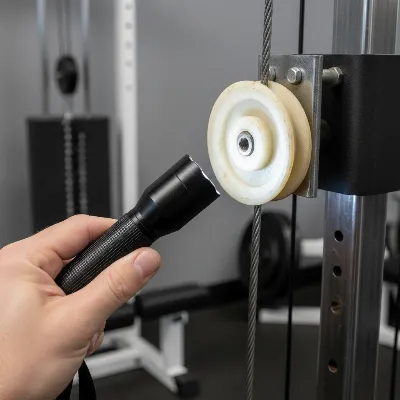 A person inspecting a home gym cable machine pulley for wear and tear.
When to Seek Professional Help or Replace Parts
While many common sticking issues can be resolved with DIY fixes, there are times when professional intervention or part replacement becomes necessary. Knowing when to call in an expert can prevent further damage and ensure your safety.
If you’ve cleaned, lubricated, tightened, and inspected your machine thoroughly, but the sticking persists, it might indicate a more complex internal problem. This could include issues with internal bearings, components within the weight stack mechanism, or frame misalignment that isn’t easily visible.
Major cable damage, such as significant fraying, multiple broken strands, or a cable that has snapped, always warrants immediate replacement. Attempting to repair a damaged cable is a serious safety hazard. Similarly, if a pulley is cracked, seizing, or has completely lost its ability to spin freely due to internal damage, it should be replaced. Deeply scratched or corroded guide rods that no longer allow smooth weight movement may also require replacement, as lubrication alone won’t solve the issue. For machines with electronic components or smart features, persistent inconsistent resistance or error codes that don’t clear with basic troubleshooting suggest an electrical or sensor issue best handled by a qualified technician. In such cases, engaging a professional ensures that repairs are done correctly and safely, protecting both your investment and your well-being.
Conclusion
A sticky home gym cable machine can be a frustrating obstacle to your fitness goals, but most issues are surprisingly simple to resolve with a bit of attention and the right tools. From the frequent culprit of insufficient lubrication to the less common problem of misaligned pulleys or worn components, understanding the common causes empowers you to act decisively. Regular cleaning, appropriate lubrication, and diligent inspections are your best defense against these hiccups, ensuring your equipment delivers smooth, consistent resistance every time. Don’t let a sticky cable machine derail your progress; by implementing these quick fixes and committing to preventative maintenance, you can enjoy an uninterrupted and effective workout experience for years to come. What’s one part of your home gym you never forget to maintain?
Frequently Asked Questions
What kind of lubricant should I not use on my home gym?
You should avoid petroleum-based lubricants, general-purpose oils, or solvents like WD-40 on areas like guide rods or plastic components, as they can attract dust and dirt, break down plastics, or cause gumming over time, worsening the problem.
How often should I lubricate my cable machine?
For optimal performance, it is recommended to lubricate the pulleys every 3-6 months and the guide rods every 3-5 months, depending on your frequency of use and the environmental conditions of your home gym.
Can I fix a frayed cable on my home gym?
No, if a cable is frayed or visibly damaged, it should be replaced immediately. Attempting to repair a frayed cable is extremely dangerous and can lead to serious injury or equipment failure during use.
What are the signs of a worn-out pulley?
Signs of a worn-out pulley include a grinding noise during operation, excessive wobble or play in the pulley, visible cracks or damage to the plastic, or the pulley failing to spin freely when the cable moves.
Why does my weight stack stick at lighter weights?
The weight stack often sticks at lighter weights when the guide rods are dry or dirty. The friction from a lack of lubrication on the guide rods and the plastic inserts within the weight plates becomes more noticeable with less overall weight to overcome it.
Is WD-40 good for lubricating gym equipment?
While WD-40 can be used in some very specific instances for penetrating rusted parts, it is generally not recommended as a primary lubricant for home gym equipment, especially on guide rods or plastic components, as it can attract dust and eventually gum up, making the problem worse. Stick to silicone-based lubricants, PTFE, or synthetic greases.
Frequently Asked Questions
What kind of lubricant should I avoid using on my home gym cable machine?
You should avoid petroleum-based lubricants, general-purpose oils, or solvents like WD-40 on areas such as guide rods or plastic components. These can attract dust and dirt, degrade plastics, or cause gumming over time, which can worsen the sticking problem.
How often should I lubricate my home gym cable machine for best performance?
For optimal performance, it is recommended to lubricate the pulleys every 3-6 months and the guide rods every 3-5 months. This frequency depends on your usage and the environmental conditions of your home gym, such as humidity or dust levels.
Can a frayed cable on my home gym be repaired?
No, if a cable on your home gym is frayed or visibly damaged, it should be replaced immediately. Attempting to repair a frayed cable is extremely dangerous and can lead to serious injury or equipment failure during use, as its structural integrity is compromised.
What are the common signs that a pulley on my cable machine is worn out?
Signs of a worn-out pulley include a grinding noise during operation, excessive wobble or play in the pulley, visible cracks or damage to the plastic, or the pulley failing to spin freely when the cable moves. These issues indicate internal damage or degradation.
Why does my home gym weight stack stick more when using lighter weights?
The weight stack often sticks more at lighter weights when the guide rods are dry or dirty. The friction from a lack of lubrication on the guide rods and the plastic inserts within the weight plates becomes more noticeable with less overall weight to overcome it, making lighter movements feel rougher.
Is WD-40 an appropriate lubricant for home gym equipment?
While WD-40 can be used for penetrating rusted parts in some specific instances, it is generally not recommended as a primary lubricant for home gym equipment, especially on guide rods or plastic components. It can attract dust and eventually gum up, making the problem worse; stick to silicone-based lubricants, PTFE, or synthetic greases.
Fix a Sticky Home Gym Cable Machine
Follow these steps to quickly resolve common sticking issues with your home gym cable machine and restore smooth operation.
Wipe down the chrome guide rods with a clean, lint-free cloth to remove dust, dirt, or dried lubricant. Inspect pulley grooves for embedded grime and carefully clean them out. This initial cleaning often significantly improves movement.
For guide rods, apply a silicone-based lubricant or synthetic grease like Super Lube sparingly with a cloth. For pulleys, use silicone spray or PTFE (Teflon) lubricants directly to the axle and spin the pulley. Avoid WD-40 on these parts.
Refer to your owner's manual to ensure all cables are routed correctly through every pulley. Check each pulley to confirm it sits squarely in its mount and rotates freely without wobbling or binding. Adjustments can often resolve friction.
Perform a thorough check of all nuts, bolts, and fasteners on your cable machine. Use a wrench to gently tighten any loose connections, especially where cables attach, pulleys are mounted, and main frame connections. This improves stability and reduces friction.
Run your fingers along each cable to feel for fraying, kinks, or rough spots. Inspect pulleys for cracks, excessive wear, or signs of internal bushing breakdown. Replace significantly damaged cables or cracked pulleys for safety and smooth function.

Great advice on checking for dirt and debris buildup. I found a surprising amount of gunk around the pulleys that I hadn’t noticed before. After a good clean and some PTFE lubricant, the resistance feels much more consistent. Definitely worth the 20 minutes it took.
My cable machine was getting really frustrating to use, especially during my morning workouts. I tried cleaning it myself before, but I wasn’t using the right kind of lubricant. The tip about using a silicone-based spray made a huge difference! It’s moving so much smoother now, like it’s brand new.
I was about to call a technician for my home gym cable machine because it was sticking so badly. The suggestion to check for tightened connections was a lifesaver! One of the bolts was a little loose, and after tightening it, the problem completely disappeared. Saved me a service fee!
I followed the steps for cleaning the guide rods, and it helped a bit, but my machine still has a slight catch sometimes. I think it might be a deeper issue with the cable routing, which seems a bit more complicated than I expected. It’s better, but not perfectly smooth yet.