Lubricating home gym cables and pulleys every 3 to 6 months is crucial for maintaining equipment safety, performance, and longevity. This practice minimizes friction, prevents premature wear, reduces noise, and ensures smooth operation, protecting your investment and enhancing workout effectiveness. Using appropriate lubricants like silicone-based sprays or PTFE lubricants is essential, while avoiding products like WD-40, which can cause damage.
The Unseen Necessity: Why Lubrication is Crucial for Your Home Gym
At the core of many home gym malfunctions lies excessive friction. Without adequate lubrication, metal-on-metal or metal-on-plastic contact within your equipment’s moving parts creates resistance, leading to grinding noises, jerky movements, and accelerated wear. Regular lubrication acts as a protective barrier, minimizing this friction and allowing components to glide effortlessly. This simple maintenance step yields substantial benefits for performance, safety, and longevity.
Firstly, a properly lubricated system ensures smooth operation and consistent resistance throughout your exercises. When cables and pulleys move freely, the intended muscle groups are engaged effectively, leading to better results and a more satisfying workout. Secondly, it is a critical safety measure. Friction can cause cables to fray, weaken, and eventually snap, posing a serious risk of injury. Lubrication drastically reduces this wear, keeping your cables strong and reliable. Lastly, extending the lifespan of your expensive fitness equipment is a major advantage. By preventing premature wear and tear, you protect your investment and avoid costly repairs or replacements down the line.
“Many home gym breakdowns stem from a lack of consistent maintenance. A little lubrication goes a long way in preventing equipment wear and ensuring user safety.” – John Peterson, Certified Fitness Equipment Technician
Identifying Key Components for Lubrication
To effectively lubricate your home gym, it’s vital to know which parts require attention. While different machines have varying designs, certain components are universally prone to friction and demand regular care. Understanding these key areas will ensure a thorough maintenance routine.
Cables are arguably the lifelines of any cable-based home gym system. They bear the brunt of the weight and are constantly moving through various channels and pulleys. The points where the cables bend and slide are prime candidates for friction buildup. Over time, the protective coating on these cables can wear down, leading to fraying if not properly maintained.
Pulleys and their internal bearings are the heart of smooth cable movement. These small wheels guide the cables and often contain bearings that facilitate rotation. When these bearings dry out or become clogged with dust and grime, they can seize, squeak, or create significant resistance, impacting the entire system’s functionality. Inspecting and lubricating these bearings is paramount for quiet and fluid operation.
Guide rods, typically found on weight stacks and Smith machines, are the smooth, vertical poles along which weights or carriages slide. They require lubrication to ensure the weight stack moves up and down without sticking or grinding. Dry guide rods can lead to jerky movements, increased strain on other components, and a less effective workout. Any other pivot points or adjustable mechanisms where metal parts slide against each other can benefit from occasional lubrication to maintain smooth functionality and prevent rust.
Choosing the Right Lubricant: What to Use and What to Avoid
Selecting the correct lubricant is critical for effective home gym maintenance. Using the wrong product can cause more harm than good, potentially degrading plastic components, attracting dust, or even accelerating corrosion. Prioritize lubricants specifically designed for fitness equipment or those known for their non-damaging properties.
Recommended Lubricants
|
Our Picks for the Best Home Gym in 2026
As an Amazon Associate I earn from qualifying purchases.
|
||
| Num | Product | Action |
|---|---|---|
| 1 | Adjustable Ropeless Battle Ropes for Home Gym for Men & Women,Adjustable Weights Cordless Battle Ropes with Storage Bag,Multifunctional Strength Training for Home & Gym |

|
| 2 | Yoleo Adjustable Weight Bench for Full Body Workout; Foldable Bench Press Bench of Home Gym Strength Training; Incline Decline Flat Utility Workout Bench with Quick Folding& Fast Adjustment (Black) |
|
| 3 | MQRW Push Up Board,Home Gym,Portable Exercise Equipment,Pilates Bar and 20 Fitness Accessories with Resistance Bands and Ab Roller Wheel,Full Body Workout at Home |
|
| 4 | TRX All-In-One Home Gym System – Complete Suspension Training Kit for Strength Training, HIIT & Full-Body Workouts at Home or Outdoors, Includes Indoor & Outdoor Anchors |
|
| 5 | Resistance Bands for Working Out, 5-Pack Elastic Loop Exercise Bands for Strength Training Stretching, Home Gym Equipment for Pilates Yoga Physical Therapy, Leg Glute Arm Workout Kit for Women Men |
|
| 6 | 6-Tier Home Gym Storage Rack with Wheels, Dumbbell Weight Rack and Yoga Mat Organizer, Multi-Purpose Gym Equipment Storage Stand for Home Gym Accessories |
|
| 7 | Ally Peaks Pull Up Bar for Doorway | Thickened Steel Max Limit 440 lbs Upper Body Fitness Workout Bar| Multi-Grip Strength for Doorway | Indoor Chin-Up Bar Fitness Trainer for Home Gym Portable |
|
| 8 | Sunny Health & Fitness Mini Stepper for Exercise at Home, Stair Step Workout Machine with Resistance Band and Over 300lb Weight Capacity, Optional Twist Motion and Free SunnyFit App Connection |
|
| 9 | Adjustable dumbbell set,20/35/45/55/70/90lbs Free Weights set with upgraded nut, 5 in 1 Weight Set Used as Kettlebells, Barbell, Push up Stand, Fitness Exercise for Home Gym Suitable Men/Women |
|
| 10 | VINSGUIR Ab Roller Wheel, Abs & Core Workout Equipment for Home Gym with Knee Pad Accessories, Abdominal Wheel for Full-body Strength Training |
|
For most home gym applications, silicone-based sprays are highly recommended. These lubricants create a slick, protective barrier that reduces friction without attracting dust and grime, making them ideal for cable pulleys and guide rods. Their non-petroleum formula is safe for most plastic and rubber components commonly found in fitness equipment.
PTFE (Polytetrafluoroethylene) lubricants, often known by brand names like Teflon®, are another excellent choice. They are highly effective at reducing friction significantly and are known for their long-lasting properties, making them suitable for cables and pulleys within strength training devices.
For heavier machinery where metal components interact with plastic or rubber parts, white lithium grease can be beneficial. It provides robust protection against rust and ensures smooth operation, especially for areas like internal pulley bolts that might experience higher stress. Some experts also suggest using general automotive grease for pulleys and bolts every few months.
Finally, specialized gym equipment lubricants like Super Lube synthetic silicone grease or PlanetSafe AiM are formulated specifically for fitness machines. Products like PlanetSafe AiM are non-toxic, odorless, fume-free, and designed to penetrate deep into joints and bearings, cleaning and protecting while repelling grime.
Lubricants to Absolutely Avoid
One of the most common mistakes is using WD-40 on fitness equipment. While it’s a popular household product, WD-40 is primarily a solvent, not a long-lasting lubricant. It can degrade plastic components, corrode surfaces over time, and leaves behind a sticky residue that actively attracts dust and dirt, creating a grimy buildup that worsens friction in the long run.
Similarly, avoid general oil-based products that are not specifically designed for fitness equipment. These can also attract dust and debris, turning your smooth-running parts into sticky, abrasive surfaces.
Lastly, resist the urge to over-lubricate. Applying too much lubricant can gum up the equipment, leading to uneven resistance or mechanical damage. A little goes a long way; the goal is a thin, even coat, not a soaked mess.
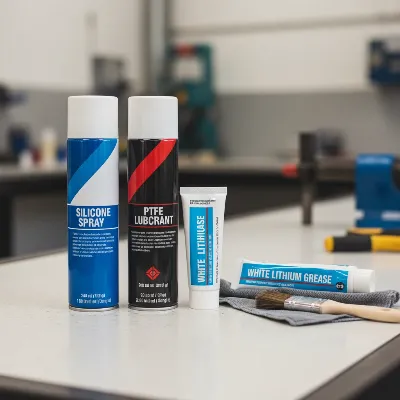 A collection of recommended lubricants and cleaning tools for home gym maintenance
Step-by-Step Guide to Safely Lubricating Your Home Gym
Proper lubrication is a straightforward process, but it requires adherence to specific steps to ensure safety and effectiveness. Follow this guide to maintain your equipment without risking damage or injury.
Step 1: Prioritize Safety and Prepare Your Equipment
Before you begin any maintenance, always disconnect the power to your home gym, if applicable. Ensure the machine is completely stationary and stable. Gather your tools, which typically include two clean rags (one for cleaning, one for applying lubricant), a Phillips head screwdriver or drill, an Allen key, and a wrench to access various components. Having these items ready will streamline the process.
Step 2: Thorough Cleaning Before Application
Cleaning is the most critical precursor to lubrication. Lubricant applied to dirty surfaces simply seals in the grime, making the problem worse. Begin by removing any shrouds or covers that might obstruct access to cables, pulleys, and guide rods. Many machines have these for aesthetic and safety reasons, but they need to be temporarily removed for deep cleaning and lubrication.
Next, use a dry, clean rag or a soft brush to remove all visible dust, dirt, and grime from the cables, pulleys, and guide rods. For stubborn grime, a damp cloth with a mild detergent can be used, but ensure all parts are thoroughly dried afterward to prevent rust. As you clean, inspect the cables for any signs of wear, such as fraying, kinks, or cracks in the plastic coating. Also, check pulleys to ensure they spin freely and guide rods for any scratches or dry spots. This is also an opportune time to check and tighten any loose bolts or nuts on your equipment.
Step 3: Precise Lubricant Application
With the equipment clean and inspected, you can now apply the lubricant. For guide rods, it’s best to spray your chosen silicone lubricant onto a clean rag first, rather than directly onto the rods. Then, apply it to the guide rods with an up-and-down motion, ensuring an even, thin coat across the entire surface. This method prevents overspray and messy residue.
When lubricating pulleys and their bearings, more careful attention is required. Often, you’ll need to remove the bolt holding the pulley in place to access the internal bearing. Use a wrench and Allen key for this. Apply a tiny amount of silicone spray or specialized grease directly to the bearing. Be cautious not to tangle the cable when reassembling the pulley. Lubricate one pulley at a time to avoid confusion with cable routing. For the cables themselves, apply a small amount of lubricant directly where they move through the pulleys or other contact points. any other pivot points or adjustable components that feel stiff or dry.
Step 4: Distribution and Final Wipe-Down
After applying the lubricant, gently move the lubricated parts through their full range of motion. For cable machines, slowly run the weight stack up and down several times. This action helps to evenly distribute the lubricant into all tight spaces and working surfaces. Finally, use a clean rag to wipe away any excess lubricant that has squeezed out or gathered on the surface. This prevents dust accumulation, keeps your equipment clean, and ensures optimal performance.
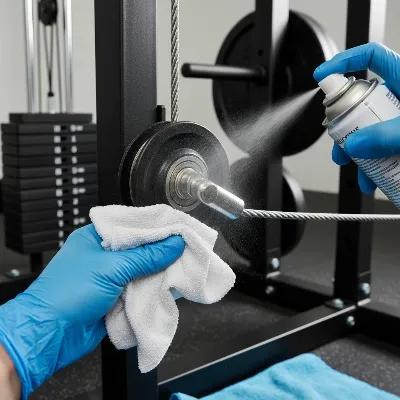 A person carefully applying silicone lubricant to a home gym pulley with a rag, cable visible
Maintenance Schedule and Ongoing Care Tips
Establishing a regular maintenance schedule is key to prolonging the life and ensuring the safety of your home gym. While specific needs may vary by equipment type and usage, general guidelines can help you stay on track.
The frequency of lubrication largely depends on how often your home gym is used. For cable pulleys, a general recommendation is to lubricate them every 3 to 6 months. Weight-stack guide rods, which experience constant friction, may benefit from lubrication with silicone spray as often as once a month. For pulleys and bolts that might require general automotive grease, a schedule of every few months is usually sufficient. Always refer to your equipment manufacturer’s guidelines, as they provide the most accurate recommendations for your specific model.
Beyond lubrication, continuous care involves several crucial steps. Regular inspections are paramount. Routinely check for any loose bolts or nuts, especially on moving parts, and tighten them as needed. Inspect all cables for any signs of fraying or damage, and check carabiners or snap hooks to ensure they are locking securely. If any component appears significantly worn or damaged, replace it immediately.
Consider your home gym’s environment. Moisture and extreme temperatures are the enemies of fitness equipment, leading to rust and material degradation. If your gym is in a garage or basement, consider using a dehumidifier to control humidity. Always wipe down equipment after each use to remove sweat, which is corrosive. Storing your equipment properly and ensuring good air circulation can also make a significant difference in its longevity.
Conclusion
Maintaining your home gym’s cables and pulleys through regular, safe lubrication is not merely an optional chore; it’s a vital practice that underpins the safety, performance, and longevity of your fitness investment. By understanding the importance of minimizing friction, identifying key components, choosing the right lubricants, and diligently following a step-by-step application process, you can ensure your equipment operates as intended for years to come. Adopting a consistent maintenance schedule, coupled with routine inspections and environmental awareness, will prevent costly repairs and, more importantly, safeguard your well-being during workouts. A small effort in proactive maintenance today translates into countless smooth, effective, and safe workouts tomorrow. What steps will you take this week to ensure your home gym is optimally maintained?
Frequently Asked Questions
What type of lubricant is best for home gym cables?
Silicone-based sprays or PTFE (Teflon®) lubricants are generally considered the best for home gym cables and pulleys. They effectively reduce friction without attracting dust or degrading plastic components, ensuring smooth and long-lasting operation. Always check your equipment’s manual for specific recommendations.
How often should I lubricate my home gym pulleys?
The frequency depends on usage, but a good general guideline is to lubricate cable pulleys every 3 to 6 months. Guide rods for weight stacks might require more frequent attention, possibly once a month, using a silicone spray. Always consult your equipment’s manufacturer for their recommended schedule.
Can I use WD-40 on my gym equipment?
No, you should avoid using WD-40 on your gym equipment. It is primarily a solvent, not a long-lasting lubricant, and can degrade plastic and rubber components, attract dust and dirt, and lead to more significant problems over time. Stick to silicone-based or specialized gym equipment lubricants.
What are the signs that my home gym cables or pulleys need lubrication?
Common signs include squeaking or grinding noises during operation, jerky or stiff movements of the weight stack or cables, increased resistance, or visible dust and grime buildup on guide rods and pulleys. Frayed cables are a sign of severe wear and require immediate inspection and potential replacement, not just lubrication.
Is professional home gym maintenance necessary?
While many lubrication and cleaning tasks can be performed by the user, professional maintenance can be beneficial for complex issues, major repairs, or if you’re unsure about specific components. Professionals can conduct deeper inspections, identify potential problems before they escalate, and ensure all parts are optimally adjusted and lubricated according to manufacturer standards.
Frequently Asked Questions
What type of lubricant is best for home gym cables?
Silicone-based sprays or PTFE (Teflonu00ae) lubricants are generally considered the best for home gym cables and pulleys. They effectively reduce friction without attracting dust or degrading plastic components, ensuring smooth and long-lasting operation. Always check your equipment's manual for specific recommendations.
How often should I lubricate my home gym pulleys?
The frequency depends on usage, but a good general guideline is to lubricate cable pulleys every 3 to 6 months. Guide rods for weight stacks might require more frequent attention, possibly once a month, using a silicone spray. Always consult your equipment's manufacturer for their recommended schedule.
Can I use WD-40 on my gym equipment?
No, you should avoid using WD-40 on your gym equipment. It is primarily a solvent, not a long-lasting lubricant, and can degrade plastic and rubber components, attract dust and dirt, and lead to more significant problems over time. Stick to silicone-based or specialized gym equipment lubricants.
What are the signs that my home gym cables or pulleys need lubrication?
Common signs include squeaking or grinding noises during operation, jerky or stiff movements of the weight stack or cables, increased resistance, or visible dust and grime buildup on guide rods and pulleys. Frayed cables are a sign of severe wear and require immediate inspection and potential replacement, not just lubrication.
Is professional home gym maintenance necessary?
While many lubrication and cleaning tasks can be performed by the user, professional maintenance can be beneficial for complex issues, major repairs, or if you're unsure about specific components. Professionals can conduct deeper inspections, identify potential problems before they escalate, and ensure all parts are optimally adjusted and lubricated according to manufacturer standards.
How to Safely Lubricate Your Home Gym
This guide outlines a four-step process to safely and effectively lubricate your home gym cables, pulleys, and guide rods, ensuring optimal performance and extending equipment lifespan.
Always disconnect power to your home gym and ensure it's stable. Gather necessary tools like rags, screwdrivers, Allen keys, and wrenches to streamline the lubrication process.
Remove any covers obstructing access to moving parts. Use a dry rag or brush to remove dust and grime from cables, pulleys, and guide rods. Inspect for wear like fraying or kinks, and tighten any loose bolts.
For guide rods, spray silicone lubricant onto a rag and apply an even, thin coat. For pulleys and bearings, remove the bolt, apply a tiny amount of silicone spray or specialized grease directly to the bearing, and reassemble carefully. Apply a small amount to cable contact points.
Gently move lubricated parts through their full range of motion to distribute the lubricant evenly. For cable machines, run the weight stack up and down several times. Wipe away any excess lubricant with a clean rag to prevent dust accumulation.

This was super helpful! I’ve had my home gym for a few years and never really thought about lubricating the cables. The explanation about minimizing friction and preventing premature wear really resonated. My workouts feel much more effective now that everything is moving smoothly.
I tried the steps for my multi-station gym, and while it did help with some of the noise, I still have a bit of a jerky movement on one of the cables. I made sure to avoid WD-40 like it said, but maybe I need a different type of lubricant for that specific issue. It’s better, but not perfect.
Good tips on keeping the home gym running. I’ve been pretty good about cleaning, but I honestly overlooked the pulleys. The reminder to lubricate every 3 to 6 months is a solid one. My only minor complaint is that finding the exact right PTFE lubricant locally was a bit of a hunt, but I got it done.
I’m so glad I found this! My cable machine was starting to sound really grindy, and I was worried I’d have to replace it. Following the advice here about using a silicone-based spray made a huge difference. It’s so much smoother and quieter now, feels like new again. Definitely worth the few minutes it took.