Installing rubber flooring in a home gym creates a durable, safe, and high-performance workout space. Rubber is the premier choice for home gym flooring due to its superior shock absorption, noise reduction, and slip resistance, protecting both equipment and joints. This guide details selecting, installing, and maintaining rubber flooring to ensure a solid foundation for your fitness activities.
Home Gym Flooring: The Foundation of Your Fitness Space
Rubber flooring defines the modern home gym experience, offering a resilient surface designed to withstand intense workouts while protecting both your equipment and your body. Unlike traditional hard floors, rubber provides essential shock absorption, significantly reducing impact on your joints during high-intensity activities like jumping or weightlifting. This cushioning not only enhances comfort but also helps minimize the risk of injury.
Beyond personal safety, rubber flooring acts as a robust shield for your subfloor, guarding against cracks, dents, and scrapes from dropped weights or heavy machinery. Its dense composition also plays a crucial role in noise reduction, dampening the sounds of clanking barbells and thudding footsteps, a blessing for multi-level homes or shared living spaces. Rubber boasts a naturally slip-resistant surface, crucial for maintaining stability even when sweat is involved. It’s also remarkably low-maintenance, resistant to moisture, stains, and most chemicals, making cleanup a breeze. Many rubber flooring options are even made from recycled materials, offering an eco-friendly choice for the conscious homeowner.
There are three primary types of rubber flooring commonly used in home gyms:
- Rubber Tiles: Often featuring interlocking edges, these puzzle-piece tiles are highly versatile and ideal for smaller or irregularly shaped spaces. They are typically easy to install and replace individual sections if damaged.
- Rubber Rolls: Providing a more seamless appearance, rolls are excellent for larger, rectangular areas. They offer continuous coverage with fewer seams, creating a professional finish. Installation can be more involved due to their weight and the need for precise cutting.
- Individual Mats: Thicker and more localized, these mats are perfect for specific zones like under a power rack, treadmill, or for targeted stretching areas. They offer maximum protection in high-impact spots but are not designed for full room coverage.
Choosing the Ideal Rubber Flooring for Your Home Gym
Selecting the right rubber flooring is paramount to optimizing your home gym. Several factors should influence your decision to ensure the flooring aligns with your specific workout needs and budget.
Key Considerations:
- Thickness and Density: These are crucial. Thicker and denser rubber offers superior impact absorption, noise reduction, and durability, making it ideal for heavy weightlifting or high-impact training. For activities like yoga, pilates, or light cardio, thinner options (e.g., 3/8-inch) may suffice. Mixed-use gyms often benefit from 1/2-inch thickness, while serious powerlifting might warrant 3/4-inch or more.
- Material: Most rubber flooring is made from recycled tire rubber, which is durable and cost-effective. Virgin rubber options are also available, often with less initial odor, though typically at a higher price point.
- Budget: Costs vary significantly based on type, thickness, and material. Tiles tend to be more budget-friendly for smaller areas and easier DIY, while rolls might have a higher upfront cost but can be more economical for large spaces.
- Space and Layout: Consider the dimensions and shape of your gym area. Interlocking tiles are forgiving for irregular layouts, while rolls are best for expansive, rectangular rooms where a seamless look is desired.
Tools and Materials You’ll Need:
Before you begin, gather your essentials for a smooth installation:
- Rubber flooring (tiles, rolls, or mats)
- Measuring tape
- Utility knife with plenty of sharp, replaceable blades
- Metal straight edge or drywall T-square
- Chalk line or marker (white pencil for dark rubber)
- Cutting mat or scrap piece of plywood
- Broom or vacuum
- Mild detergent and mop
- Optional: Heat gun (for cutting thick rubber), rubber mallet, knee pads, safety gloves, safety glasses, double-sided tape, or rubber-specific adhesive (if required).
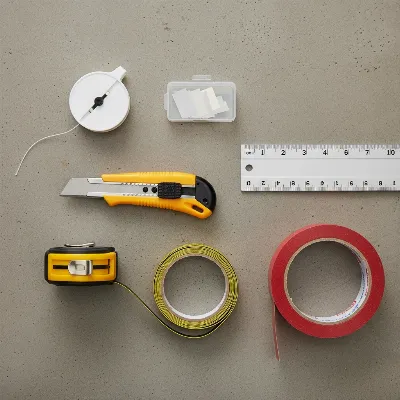 Essential tools for DIY rubber flooring installation in a home gym, including a utility knife, measuring tape, and straight edge.
DIY Installation Guide: Step-by-Step to a Perfect Home Gym Floor
Installing your rubber flooring might seem like a significant project, but by following these steps, you can achieve a professional-looking finish.
1. Subfloor Preparation
|
Our Picks for the Best Home Gym in 2026
As an Amazon Associate I earn from qualifying purchases.
|
||
| Num | Product | Action |
|---|---|---|
| 1 | 6-Tier Home Gym Storage Rack with Wheels, Dumbbell Weight Rack and Yoga Mat Organizer, Multi-Purpose Gym Equipment Storage Stand for Home Gym Accessories |

|
| 2 | Sunny Health & Fitness Mini Stepper for Exercise at Home, Stair Step Workout Machine with Resistance Band and Over 300lb Weight Capacity, Optional Twist Motion and Free SunnyFit App Connection |
|
| 3 | Resistance Bands for Working Out, 5-Pack Elastic Loop Exercise Bands for Strength Training Stretching, Home Gym Equipment for Pilates Yoga Physical Therapy, Leg Glute Arm Workout Kit for Women Men |
|
| 4 | MQRW Push Up Board,Home Gym,Portable Exercise Equipment,Pilates Bar and 20 Fitness Accessories with Resistance Bands and Ab Roller Wheel,Full Body Workout at Home |
|
| 5 | Adjustable dumbbell set,20/35/45/55/70/90lbs Free Weights set with upgraded nut, 5 in 1 Weight Set Used as Kettlebells, Barbell, Push up Stand, Fitness Exercise for Home Gym Suitable Men/Women |
|
| 6 | Adjustable Ropeless Battle Ropes for Home Gym for Men & Women,Adjustable Weights Cordless Battle Ropes with Storage Bag,Multifunctional Strength Training for Home & Gym |
|
| 7 | TRX All-In-One Home Gym System – Complete Suspension Training Kit for Strength Training, HIIT & Full-Body Workouts at Home or Outdoors, Includes Indoor & Outdoor Anchors |
|
| 8 | Ally Peaks Pull Up Bar for Doorway | Thickened Steel Max Limit 440 lbs Upper Body Fitness Workout Bar| Multi-Grip Strength for Doorway | Indoor Chin-Up Bar Fitness Trainer for Home Gym Portable |
|
| 9 | Yoleo Adjustable Weight Bench for Full Body Workout; Foldable Bench Press Bench of Home Gym Strength Training; Incline Decline Flat Utility Workout Bench with Quick Folding& Fast Adjustment (Black) |
|
| 10 | VINSGUIR Ab Roller Wheel, Abs & Core Workout Equipment for Home Gym with Knee Pad Accessories, Abdominal Wheel for Full-body Strength Training |
|
A clean, dry, and level subfloor is the cornerstone of a successful installation. Start by thoroughly sweeping and vacuuming the entire area to remove all dust, dirt, and debris. Any oil, grease, paint, or old adhesive residue should be removed. Next, ensure the subfloor is completely dry. Moisture can prevent proper adhesion (if using glue) and lead to issues down the line. Finally, check for levelness; variations greater than 3/16 inch over a 10-foot span should be corrected using a self-leveling compound for optimal results. If you have carpet, it must be removed.
2. Acclimatization
Rubber flooring, especially rolls, needs time to adapt to the room’s temperature and humidity. Unroll your rubber flooring or lay out your tiles in the installation area and let them sit for at least 24 to 48 hours. This allows the material to expand or contract to its final form, preventing gaps, buckling, or shifting after installation. Maintain the room at a consistent temperature (ideally around 65°F / 18°C) before, during, and after this period.
3. Measuring and Layout Planning
Accurate measurements are key. Measure the length and width of your room carefully. It’s often recommended to dry-fit your flooring first, especially with tiles, to plan your layout. For rolls, plan how they will unroll to minimize seams and waste. Many professionals suggest starting installation from the center of the room and working outwards, or from a prominent corner, to ensure symmetry and uniform cuts around the perimeter. Plan for a slight expansion gap around the edges, similar to other flooring types.
4. Cutting Techniques
You’ll almost certainly need to cut rubber to fit edges, corners, or obstacles.
- Marking: Lay the rubber flat and use your measuring tape and a chalk line or marker to clearly mark your cut lines. Measure twice, cut once!
- Scoring: Place a cutting mat or scrap wood underneath the rubber to protect your subfloor. Using a straight edge as a guide, lightly score the rubber along your marked line with a sharp utility knife.
- Cutting: For thinner rubber, repeat the scoring process, applying more pressure with each pass until you cut through. For thicker rubber, you might score it deeply and then bend the material to snap it along the score line, or use an oscillating tool with a metal blade (ensure good ventilation!). Dipping your knife blade in soapy water can also reduce friction and make cutting easier. Always use fresh, sharp blades for clean cuts and work slowly and deliberately.
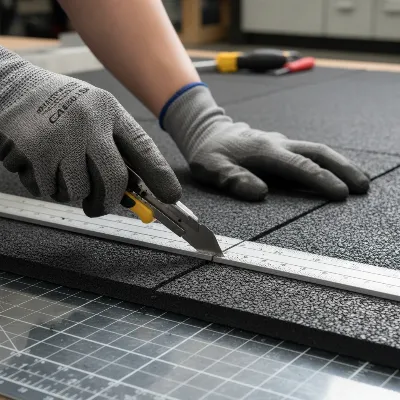 A person using a utility knife and a metal straight edge to precisely cut a rubber gym flooring roll.
5. Laying Tiles or Rolls
- Tiles: Starting from your chosen corner or center point, begin interlocking the tiles like puzzle pieces. Ensure each tile fits snugly, pressing down firmly to eliminate gaps. A rubber mallet can be gently used to tap tiles into place.
- Rolls: Unroll the first section of rubber flooring along your longest wall or planned starting line. Carefully align it and ensure it lies flat. For subsequent rolls, butt them tightly against the previous one to create a seamless surface.
6. Securing the Flooring
The method of securing depends on your flooring type and preference:
- Loose Lay: Many interlocking tiles and heavy individual mats are designed to be loose-laid. Their weight and the tight interlocks (for tiles) keep them in place, especially in smaller areas or under heavy equipment. This method allows for easy removal or replacement.
- Double-Sided Tape: For rubber rolls or to prevent shifting of tiles in higher-traffic areas, heavy-duty double-sided tape can be applied around the perimeter and along seams.
- Full Glue-Down: For a permanent, most stable installation (often recommended for thinner rolls or commercial settings), a full glue-down with a rubber-specific adhesive is used. This requires careful application with a notched trowel and often a floor roller to ensure full contact and prevent air bubbles. Follow the adhesive manufacturer’s instructions precisely.
Once installed, allow at least 24 hours (or as recommended by adhesive instructions) before placing heavy equipment or engaging in intense workouts on the new floor.
Maintaining Your Rubber Home Gym Flooring
One of the great advantages of rubber flooring is its low maintenance. Regular care will ensure its longevity and continued performance.
- Regular Cleaning: Sweep or vacuum your rubber flooring regularly to remove dust, dirt, and debris that can accumulate and abrade the surface over time.
- Deep Cleaning: For a more thorough clean, use a damp mop with warm water and a mild, pH-neutral detergent. Avoid harsh chemicals or abrasive cleaners, as these can damage the rubber. Rinse thoroughly with clean water to prevent residue buildup.
- Spill Management: Wipe up any spills, especially sweat or water, promptly to maintain hygiene and prevent potential slips.
- Inspecting for Wear: Periodically inspect your flooring for any signs of wear and tear, especially in high-impact zones. Individual tiles can often be replaced, and small damages to rolls can sometimes be patched.
- Protective Layers: Consider placing additional protective layers or pads under extremely heavy equipment or in areas where barbells are frequently dropped to maximize floor lifespan.
“Investing in quality rubber flooring for your home gym is an investment in your safety, your equipment’s longevity, and the overall quality of your workout environment. The DIY installation is surprisingly accessible, making it a powerful way to personalize and protect your fitness journey.” – Sarah Jenkins, Certified Home Fitness Specialist.
Conclusion
Installing rubber flooring in your home gym is a highly rewarding DIY project that creates a professional, safe, and durable workout space. By understanding the different types of rubber flooring, carefully preparing your subfloor, and following a methodical installation process, you can transform any room into an ideal environment for achieving your fitness goals. The benefits of shock absorption, noise reduction, and enhanced safety far outweigh the effort, making rubber flooring an indispensable part of your home gym setup.
What specific fitness goals are you hoping to achieve with your newly floored home gym?
Frequently Asked Questions
How thick should rubber flooring be for a home gym with heavy weights?
For a home gym involving heavy weightlifting, powerlifting, or frequent barbell drops, a minimum thickness of 1/2 inch (approximately 12mm) is recommended. For Olympic lifting or very high-impact activities, consider 3/4 inch (about 19mm) or thicker to ensure maximum protection for both your subfloor and joints.
Can I install rubber flooring over existing carpet in my home gym?
No, it is generally not recommended to install rubber flooring directly over carpet. The soft, uneven surface of carpet will prevent the rubber from laying flat and stable, leading to an unsafe and ineffective gym floor. The carpet should be removed, and the subfloor prepared properly before installation.
Is adhesive always necessary for securing rubber gym flooring?
Not always. Many interlocking rubber tiles and heavy individual mats can be loose-laid, as their weight and design keep them in place without adhesive. However, for rubber rolls or in high-traffic areas where shifting is a concern, double-sided tape or a full glue-down application may be recommended for added stability and a more permanent finish.
What are the main types of rubber flooring for home gyms?
The three main types of rubber flooring for home gyms are rubber tiles, rubber rolls, and individual mats. Rubber tiles are versatile for small spaces, rolls offer a seamless look for larger areas, and individual mats provide targeted protection under specific equipment.
How do I maintain my rubber home gym flooring?
Maintain rubber home gym flooring by regularly sweeping or vacuuming to remove debris. For deep cleaning, use a damp mop with warm water and a mild, pH-neutral detergent, avoiding harsh chemicals. Promptly wipe up spills and periodically inspect for wear and tear.
DIY Rubber Flooring Installation for Home Gyms
This guide provides step-by-step instructions for installing rubber flooring in your home gym, ensuring a professional, safe, and durable workout space.
Ensure your subfloor is clean, dry, and level. Sweep and vacuum thoroughly, remove any residues, and correct any level variations greater than 3/16 inch over a 10-foot span. Remove existing carpet if present.
Unroll rubber flooring or lay out tiles in the installation area for 24 to 48 hours. This allows the material to adapt to the room's temperature and humidity, preventing issues like buckling or shifting after installation. Maintain a consistent room temperature, ideally around 65u00b0F (18u00b0C).
Accurately measure the room's dimensions. Dry-fit tiles or plan roll placement to minimize seams and waste. Consider starting from the center or a prominent corner for symmetry and uniform cuts, allowing for a slight expansion gap around edges.
Mark cut lines clearly with a measuring tape and chalk line. Use a sharp utility knife and a straight edge to score the rubber, repeating passes until cut through. For thicker rubber, score deeply and bend to snap, or use an oscillating tool with proper ventilation. Use fresh blades and soapy water for easier cutting.
For tiles, interlock them snugly, using a rubber mallet if needed. For rolls, unroll and align tightly against previous sections. Secure the flooring using loose-lay for heavy mats/tiles, double-sided tape for rolls or high-traffic areas, or a full glue-down with rubber-specific adhesive for permanent installations. Allow 24 hours before heavy use.

This flooring is a game-changer for my home gym. The shock absorption is noticeable, especially when I’m doing plyometrics. I went with the interlocking tiles mentioned, and they were pretty easy to put together. My only minor gripe is that the initial rubber smell took a few days to fully dissipate, even with good ventilation.
Seriously impressed with how much better my home gym feels after putting down rubber flooring. The protection for my equipment, especially my dumbbells, is a huge relief. I also noticed a big improvement in joint comfort during my HIIT workouts. Highly recommend this upgrade.
I followed the DIY guide for installing rubber flooring in my garage gym, and it was super helpful. The section on proper subfloor prep made a huge difference, and my floor feels incredibly stable. It’s definitely reduced the noise from my deadlifts, which my family appreciates!
The guide was good for general tips, but I found the cutting process for the rubber rolls a bit more challenging than expected, even with a utility knife. My edges aren’t perfectly straight in some spots. Still, the slip resistance is excellent, and I feel much safer lifting heavy weights now.