A home gym offers unparalleled convenience, allowing you to sculpt your physique without ever leaving your house. However, like any piece of frequently used equipment, your home gym requires occasional maintenance to ensure both safety and optimal performance. One of the most common issues that can arise, and one that demands immediate attention, is a frayed cable. Ignoring a damaged cable isn’t just a minor inconvenience; it poses a significant safety risk that could lead to serious injury or equipment failure during a workout. This guide will walk you through the essential steps to safely identify, remove, and replace a frayed cable on your home gym system, helping you maintain a safe and effective training environment right at home.
Understanding Frayed Home Gym Cables
A frayed home gym cable refers to any cable where the protective outer coating is compromised, or individual wire strands within the cable begin to separate, break, or unravel. These cables are typically constructed from steel wire strands, often coated in nylon or vinyl for durability and smooth operation through pulleys. When this coating wears away or the internal wires become exposed, the cable is considered frayed.
Frayed cables are inherently dangerous because they are significantly weakened and can snap unexpectedly under tension. This sudden failure can cause weights to drop, components to recoil violently, or even result in the user losing balance and incurring injury. The primary causes of cable fraying include continuous friction against pulleys, constant tension and heavy loads, insufficient lubrication, exposure to moisture leading to rust, and simply the age and regular wear and tear of the equipment. For expert home gym reviews on this site.
Spotting the Warning Signs: Is Your Cable Fraying?
Regularly inspecting your home gym equipment is crucial for identifying potential issues before they escalate into safety hazards. Catching the early signs of cable fraying can save you from unexpected breakdowns and potential injury. Don’t wait for a complete failure; be proactive in your assessment.
Visually, you might notice visible strands of wire protruding from the cable’s protective coating, particularly at points where the cable passes over pulleys or connects to attachments. Look for cracked, peeled, or missing plastic coating, which exposes the inner wires to friction and rust. Any bumps, lumps, or areas where the cable appears twisted or spiraling are also strong indicators of internal damage or stretching.
Beyond what you can see, listen for unusual noises during your workouts. Squeaking, grinding, or any popping sounds as the cable moves under load can signal internal damage or excessive friction on the pulleys. Pay attention to how the equipment feels; inconsistent resistance, sticky movement, or a general feeling of instability when using cable-driven exercises can all point to a compromised cable system. A cable that feels “loose” even after tension adjustments or exhibits a stretching sensation under load also warrants immediate inspection and likely replacement.
Essential Tools and Materials for Cable Replacement
Before you begin the replacement process, gathering the right tools and materials is paramount. Having everything on hand will ensure a smoother, more efficient repair, and most importantly, enhance your safety. A well-prepared workspace contributes significantly to a successful DIY project, minimizing frustration and potential mistakes.
For removing the old cable, you will typically need a wrench set (adjustable wrenches or a socket set are useful for various nuts and bolts) and a screwdriver set (Phillips and flathead may be required). A crucial tool is a good quality pair of wire cutters or cable cutters, specifically designed for cutting thick, multi-strand gym cables. Standard household wire cutters might struggle or produce a messy cut. Additionally, a tape measure is essential for accurately sizing your new cable.
Safety should always be your top priority. Always wear heavy-duty work gloves to protect your hands from sharp wire ends and metal components. Safety goggles are also highly recommended to shield your eyes from any stray metal bits that might spring loose during cutting or disassembly. When it comes to the replacement cable itself, you may need a custom replacement cable from a reputable third-party vendor, which often offers better value and customization than manufacturer parts. If you are building the cable yourself, you’ll require the correct gauge steel cable, along with thimbles (to protect the loop from wear) and ferrules or cable crimps to secure the loops. A cable crimper will then be needed to properly fasten these.
Step-by-Step: Replacing a Frayed Home Gym Cable
Replacing a frayed cable on your home gym might seem daunting, but by following a methodical approach, it’s a manageable task that can restore your equipment to safe working order. Prioritize safety and attention to detail throughout the entire process.
1. Safety First: Power Down and Unload
Begin by ensuring the machine is completely safe to work on. If your home gym has a power cord, unplug it from the wall outlet. Crucially, remove all weights or resistance from the weight stack or any adjustable mechanisms. This eliminates tension on the cables, preventing unexpected movement and making disassembly much safer. Never attempt to work on cables under load.
2. Document the Cable’s Path: Pictures are Your Best Friend
This step is arguably the most critical for multi-gym setups. Before loosening any bolts or removing the old cable, take multiple photographs and even draw a diagram of the cable’s entire route through the pulleys, guide rods, and attachment points. Pay close attention to how each end of the cable is secured and any “floating pulleys” that aren’t fixed to the frame. These visual aids will be invaluable when installing the new cable, preventing confusion and ensuring correct reassembly. “A common mistake DIYers make is underestimating the complexity of cable routing on modern home gyms,” notes Alex Thompson, a veteran fitness equipment technician. “Documenting the path thoroughly saves countless headaches later.”
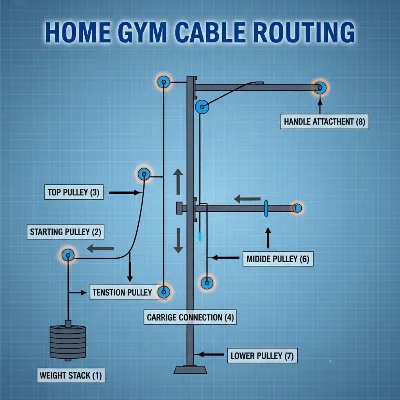 Detailed diagram showing the routing of a home gym cable through various pulleys and attachment points.
3. Careful Removal of the Old Cable: Don’t Force It
Once the path is documented, you can begin removing the damaged cable. Use your wrenches and screwdrivers to carefully loosen the nuts and bolts securing the cable ends. For sections where the cable’s hardware doesn’t fit through pulleys, it’s often easier and safer to cut the cable with your specialized wire cutters rather than attempting to disassemble entire pulley systems. As you remove the old cable, note any spacers or bushings around pulleys and ensure they are not lost. If your machine has floating pulleys, consider using masking tape or rope to temporarily secure them in place to prevent tangling.
4. Sourcing and Measuring Your New Cable: Precision is Key
With the old cable removed, you have a perfect template for your replacement. If possible, order a pre-made replacement cable designed for your specific home gym model. Alternatively, many reputable third-party suppliers offer custom-length cables. When measuring, lay the old cable flat and measure its exact length, end-to-end. Ensure your new cable matches this length precisely, as even slight discrepancies can affect tension and machine performance. Consider upgrading to a slightly thicker or commercial-grade coated cable if your old one failed due to wear, ensuring greater durability for future use.
5. Installing the Replacement Cable: Follow the Path
Now, it’s time to thread the new cable through the machine. Refer constantly to your photographs and diagrams from Step 2. Start by attaching one end of the new cable to its designated anchor point. Then, carefully feed the cable through the entire pulley system, following the exact route of the old cable. Take your time to avoid twists or snags. This is where your detailed documentation will prove its worth. Ensure all pulleys rotate freely and the cable sits correctly within their grooves.
6. Securing and Testing: Ensure Smooth Operation
Once the new cable is fully routed, attach the remaining end securely using the appropriate hardware (thimbles and crimps, or pre-attached fittings). Tighten all nuts and bolts firmly, but avoid overtightening, which can bind pulleys or damage components. After installation, perform several slow, controlled test runs without any added weight. Check that the cable moves smoothly through all pulleys, without any rubbing, catching, or unusual sounds. Ensure there is appropriate tension and no excessive slack. Gradually add a small amount of weight and repeat the test runs, carefully observing the cable’s performance.
DIY vs. Professional Help: Knowing When to Call an Expert
While many home gym cable replacements are achievable for the average DIY enthusiast, it’s important to recognize your limits. Attempting a repair beyond your skill level can lead to further damage, or worse, create a dangerous situation. Knowing when to call in a professional is a sign of smart equipment ownership.
DIY is appropriate when:
- You have clear, comprehensive instructions (like your machine’s manual or a detailed guide).
- You possess the necessary tools and feel comfortable using them.
- The cable routing is relatively straightforward, or you’ve thoroughly documented a more complex path.
- You can easily source the correct replacement parts.
- You are confident in your ability to perform the steps safely and accurately.
Professional assistance is recommended when:
- The cable system is exceptionally complex, involving multiple interconnected cables or unfamiliar mechanisms.
- You cannot identify the exact type of replacement cable or hardware needed.
- Specialized tools (e.g., specific crimping tools for a particular cable system) are required that you don’t own and won’t frequently use.
- You encounter unexpected difficulties during disassembly or installation that you cannot troubleshoot.
- You are unsure about the safety implications of a particular step or the overall integrity of the repair.
- Your equipment is still under warranty, and DIY repair might void it.
> “Never compromise on safety when it comes to fitness equipment. If there’s any doubt about your ability to perform a repair correctly, a qualified technician is always the best investment.” – Dr. Elena Petrova, Fitness Equipment Safety Specialist
Preventative Maintenance: Keeping Your Home Gym Cables Healthy
Replacing a frayed cable is a necessary repair, but proactive maintenance can significantly extend the lifespan of your home gym cables and prevent future issues. Integrating a routine inspection and care schedule into your fitness regimen will keep your equipment performing optimally and safely.
Establish a regular inspection routine, ideally weekly or monthly, depending on how frequently you use your gym. During these checks, visually inspect all cables for the signs of fraying mentioned earlier (visible strands, cracked coating, bumps). Run your hand along the length of each cable, feeling for any irregularities or rough patches. Observe how the cables move through the pulleys, listening for unusual noises.
Lubrication is key to minimizing friction and wear. Use a silicone-based spray lubricant specifically designed for fitness equipment. Avoid petroleum-based lubricants, which can attract dust and grime, and potentially degrade plastic coatings over time. Apply the silicone spray sparingly to the cables and generously to all pulleys, especially the bearings, every 3-6 months. This reduces friction, ensures smooth operation, and helps prevent fraying.
Beyond lubrication, regular cleaning of your cables and pulleys is important. Wipe down cables to remove sweat, dust, and grime, which can contribute to friction and rust. Ensure your gym space is well-insulated and dry to prevent moisture buildup, a common cause of rust on metal components. Finally, be mindful of proper usage; avoid dropping weight stacks, as sudden impacts can stress cables and pulleys. If your cables are older, generally exceeding 5-6 years, consider proactive replacement even if no visible fraying is present, as materials degrade over time.
Frequently Asked Questions
How often should home gym cables be replaced?
The frequency depends on usage and maintenance. For heavy use, inspect monthly and consider replacement every 3-5 years. With light use and good maintenance, cables can last 5-10 years, but any sign of fraying warrants immediate replacement.
Can I use any type of cable for my home gym?
No, it’s crucial to use replacement cables specifically designed for home gym equipment, matching the original’s diameter, material (e.g., steel with a protective coating), and strength rating. Using an incorrect cable type can compromise safety and performance.
What kind of lubricant is best for gym cables?
Silicone-based spray lubricants are highly recommended for gym cables and pulleys. They reduce friction, repel dust, and are safe for plastic and rubber components. Avoid petroleum-based lubricants which can attract dirt and degrade materials.
Is it safe to use a home gym with a slightly frayed cable?
No, it is never safe to use a home gym with any degree of cable fraying. Even minor fraying indicates a weakened cable that could snap unexpectedly under load, leading to serious injury. Replace the cable immediately.
How do I measure a replacement cable accurately?
The most accurate method is to lay the old, removed cable flat and measure its entire length from end to end, including any attached hardware. Alternatively, consult your equipment’s user manual for cable length specifications.
What if my cable gets stuck during installation?
If a cable gets stuck, do not force it. This often indicates it’s twisted, caught on an obstruction, or routed incorrectly. Retrace the path, referring to your documentation, and gently adjust the cable until it moves freely.
