Maintaining a clean and sanitized home gym is essential for health, equipment longevity, and a pleasant workout environment. Regular cleaning prevents the buildup of sweat, bacteria, and grime, which can otherwise lead to unpleasant odors, skin infections, and premature degradation of valuable fitness gear. By following proper techniques and using safe products, you can ensure your home gym remains hygienic and your investment is protected for years of effective workouts.
The Importance of a Clean Home Gym
Why Your Home Gym Needs Regular Cleaning and Sanitizing
Even with a single user, home gym equipment accumulates sweat, dead skin cells, and dust during each session, creating an ideal breeding ground for bacteria, fungi, and viruses. This accumulation not only poses hygiene concerns and can lead to skin infections, but also causes unpleasant odors. Furthermore, the salts and acids in sweat can corrode metal parts, while grime can degrade upholstery and electronic components, shortening the lifespan of your machines and weights. Regular cleaning and sanitizing protect your health and keep your equipment in peak condition, safeguarding your investment for productive workouts.
Cleaning vs. Sanitizing: Understanding the Difference
It’s important to distinguish between cleaning and sanitizing, as both are crucial for a healthy gym environment. Cleaning involves physically removing dirt, dust, sweat, and other impurities from surfaces using soap or detergent and water. This process reduces germ count but doesn’t kill them all. Sanitizing or disinfecting, conversely, uses chemical solutions to actively kill bacteria and viruses on surfaces. For optimal hygiene, a two-step approach is best: first, clean equipment to remove visible grime, then sanitize to eliminate remaining pathogens, significantly lowering infection risk. For expert home gym reviews on this site.
Essential Cleaning Supplies for Your Home Gym
Must-Have Tools and Products
Equipping yourself with the right cleaning arsenal simplifies and enhances the task. For most home gym equipment, you’ll need several microfiber cloths, which effectively trap dust and grime without scratching. Keep a few spray bottles for DIY solutions. A soft-bristle brush is invaluable for textured grips (knurling) on weights, while a vacuum or broom maintains clean flooring. Mild dish soap and distilled white vinegar are versatile, non-abrasive cleaning agents. Isopropyl alcohol, diluted with water, is perfect for safely cleaning electronic screens. For powerful germ-killing, consider disinfectant wipes or sprays, but always verify they are safe for your specific equipment materials to prevent damage. Baking soda can act as a gentle abrasive or odor neutralizer, and a few drops of essential oils like tea tree or lemon can add natural antimicrobial properties and a fresh scent to homemade cleaners.
DIY Cleaning Solutions You Can Make at Home
|
Our Picks for the Best Home Gym in 2026
As an Amazon Associate I earn from qualifying purchases.
|
||
| Num | Product | Action |
|---|---|---|
| 1 | TRX All-In-One Home Gym System – Complete Suspension Training Kit for Strength Training, HIIT & Full-Body Workouts at Home or Outdoors, Includes Indoor & Outdoor Anchors |

|
| 2 | Adjustable Ropeless Battle Ropes for Home Gym for Men & Women,Adjustable Weights Cordless Battle Ropes with Storage Bag,Multifunctional Strength Training for Home & Gym |
|
| 3 | Ally Peaks Pull Up Bar for Doorway | Thickened Steel Max Limit 440 lbs Upper Body Fitness Workout Bar| Multi-Grip Strength for Doorway | Indoor Chin-Up Bar Fitness Trainer for Home Gym Portable |
|
| 4 | MQRW Push Up Board,Home Gym,Portable Exercise Equipment,Pilates Bar and 20 Fitness Accessories with Resistance Bands and Ab Roller Wheel,Full Body Workout at Home |
|
| 5 | Resistance Bands for Working Out, 5-Pack Elastic Loop Exercise Bands for Strength Training Stretching, Home Gym Equipment for Pilates Yoga Physical Therapy, Leg Glute Arm Workout Kit for Women Men |
|
| 6 | Sunny Health & Fitness Mini Stepper for Exercise at Home, Stair Step Workout Machine with Resistance Band and Over 300lb Weight Capacity, Optional Twist Motion and Free SunnyFit App Connection |
|
| 7 | Adjustable dumbbell set,20/35/45/55/70/90lbs Free Weights set with upgraded nut, 5 in 1 Weight Set Used as Kettlebells, Barbell, Push up Stand, Fitness Exercise for Home Gym Suitable Men/Women |
|
| 8 | VINSGUIR Ab Roller Wheel, Abs & Core Workout Equipment for Home Gym with Knee Pad Accessories, Abdominal Wheel for Full-body Strength Training |
|
| 9 | Yoleo Adjustable Weight Bench for Full Body Workout; Foldable Bench Press Bench of Home Gym Strength Training; Incline Decline Flat Utility Workout Bench with Quick Folding& Fast Adjustment (Black) |
|
| 10 | 6-Tier Home Gym Storage Rack with Wheels, Dumbbell Weight Rack and Yoga Mat Organizer, Multi-Purpose Gym Equipment Storage Stand for Home Gym Accessories |
|
Creating your own cleaning solutions is a cost-effective and chemical-conscious way to maintain your home gym. An effective all-purpose cleaner and disinfectant can be made by combining equal parts distilled white vinegar and water in a spray bottle, suitable for most non-porous surfaces. For electronic screens, a diluted solution of one part 70% or higher isopropyl alcohol to one part water, applied to a microfiber cloth, is ideal for streak-free cleaning without damaging sensitive components. For general wiping of weights and benches, a few drops of mild dish soap in a gallon of warm water provides a gentle yet effective cleaning agent. Adding 10-15 drops of tea tree or lemon essential oil to your vinegar-water spray can boost its antimicrobial power and leave a refreshing aroma.
Step-by-Step Guide to Cleaning Different Home Gym Equipment
Maintaining diverse fitness gear requires tailored cleaning methods to ensure both hygiene and equipment longevity. Each piece of equipment in your home gym has unique material compositions and electrical components that demand specific care. Neglecting these details can lead to damage, compromised performance, or even accelerate wear and tear. Therefore, approaching each category of equipment with a targeted cleaning strategy is essential to keep your workout space safe, functional, and pristine.
Cardio Machines (Treadmills, Ellipticals, Stationary Bikes)
Cardio machines are often high-touch areas, accumulating significant sweat and skin oils. Begin by unplugging all powered equipment to prevent electrical hazards. Never spray cleaning solutions directly onto the machine, especially near electronic components, outlets, or plugs. Instead, dampen a clean microfiber cloth with a mild all-purpose cleaner or a DIY vinegar-and-water solution. Wipe down all surfaces that come into contact with your body, including handlebars, control panels, and the frame. For touchscreens or LCD consoles, use a lint-free cloth dampened with a 1:1 solution of 91% isopropyl alcohol and water to avoid damage. After cleaning, use a dry microfiber cloth to wipe down the machine again, ensuring it is completely dry before plugging it back in or using it.
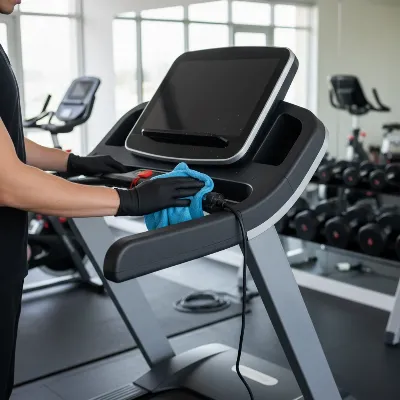 A person carefully wiping down a treadmill console with a microfiber cloth, emphasizing unplugging the machine for safety in a modern home gym setting
Free Weights (Dumbbells, Kettlebells, Barbells)
Free weights are constantly handled, making them prime spots for germ transfer. For most dumbbells, kettlebells, and barbells, wipe them down after each use with a disinfectant wipe or a cloth dampened with a mild soap and water solution, or your DIY vinegar spray. Pay special attention to the knurling (textured grips), which can trap dead skin and sweat; a soft-bristle brush can help dislodge debris from these areas before wiping. For cast iron weights, immediate and thorough drying is crucial to prevent rust. Rubber-coated weights are generally more resilient and can be cleaned with disinfectant wipes or mild soap and water. If you have stainless steel weights, specific stainless steel cleaners can be used, while plastic or neoprene weights respond well to general-purpose spray cleaners. Always ensure all weights are completely dry before storage to prevent moisture damage.
Upholstered Benches and Padded Machines
Upholstered benches and padded sections of machines are highly absorbent and prone to sweat buildup. After every workout, wipe down these surfaces with a damp cloth and a mild soap-and-water solution or a disinfectant spray (applied to the cloth first, not directly to the upholstery). Avoid harsh chemicals like bleach, abrasive cleaners, or highly acidic/corrosive solutions, as these can cause vinyl and leather to crack, fade, or degrade over time. For leather upholstery, use a cleaner specifically designed for leather, and consider conditioning it periodically to maintain its suppleness. For fabric upholstery, vacuum or brush off loose dirt, then spot clean with a fabric upholstery cleaner according to product instructions. Always ensure these areas are dry to prevent mold and mildew growth.
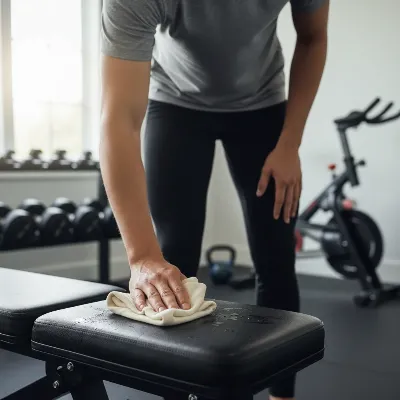 A person meticulously wiping a padded workout bench with a damp cloth in a tidy home gym, highlighting upholstery care
Yoga Mats, Resistance Bands, and Foam Rollers
These accessories are in direct contact with your body and often absorb moisture. After each use, wipe down yoga mats and foam rollers with a 50/50 mix of water and white vinegar, or a mild soap-and-water solution. For a deeper clean, some yoga mats are machine washable—always check the manufacturer’s care tag. For resistance bands, a thorough cleaning involves soaking them in a bucket of warm water with a few drops of dish soap. Agitate them gently for 15-20 seconds, then use a soft brush or cloth to scrub away any stubborn dirt. Rinse the bands under running water until all soap residue is gone, and then lay them flat to air dry completely. Ensuring these items are fully dry before storage is vital to prevent mildew and unpleasant odors.
Flooring (Rubber Mats, Carpet)
The floor of your home gym, whether rubber matting or carpet, collects dust, sweat, and debris. For rubber mats, begin by sweeping or vacuuming to remove loose dirt. Then, mop the mats with a solution of warm water and a cup of mild dish soap, adding a splash of lemon juice for extra freshness if desired. Allow the mats to air dry completely for a streak-free finish and to prevent a rubber odor. For carpeted gym areas, regular vacuuming is essential. Consider steam cleaning every few months, depending on usage frequency, to provide deep sanitization and remove embedded grime and allergens. Maintaining clean flooring contributes significantly to the overall hygiene and appeal of your workout space.
Safety Precautions and Best Practices
When cleaning your home gym, safety is paramount for your well-being and equipment longevity. Using the wrong products or techniques can inadvertently cause damage, rendering expensive gear ineffective or unsafe. Adhering to specific precautions and best practices ensures your cleaning routine is both highly effective and completely harmless to your equipment and yourself.
What to Avoid When Cleaning Your Equipment
To protect your investment and maintain a safe workout environment, several cleaning practices should be strictly avoided. Firstly, never spray cleaning solutions directly onto electronic components, consoles, or power outlets; moisture can cause electrical shorts and permanent damage. Always spray onto a cloth first. Secondly, steer clear of harsh chemicals such as bleach, abrasive cleaners, highly acidic solutions (pH of 4.0 or less), or corrosive chemicals (pH of 11.5 or higher). These can strip powder coatings, discolor plastic, degrade vinyl and leather, and damage sensitive screens. Lastly, avoid leaving equipment wet after cleaning. Excess moisture can lead to rust on metal parts and foster mold or mildew growth on porous materials. Always dry thoroughly after cleaning.
> “Many people believe harsh chemicals are best for killing germs, but for home gym equipment, gentler options like diluted vinegar or mild soap are often sufficient and much safer for various materials. Always prioritize what’s best for your equipment’s longevity.” – Jane Doe, Certified Cleaning Specialist
General Tips for Safe and Effective Cleaning
Implementing a few general tips can significantly enhance your home gym cleaning routine. Always refer to your equipment’s manufacturer’s instructions for specific cleaning recommendations and compatible products; this is the most reliable source for preventing damage. Ensure adequate ventilation when using any cleaning agents, especially disinfectants, to avoid inhaling fumes. Drying all surfaces completely after cleaning is crucial to prevent rust, water spots, and the growth of microorganisms. When wiping, work from top to bottom on larger equipment to prevent drips from contaminating already cleaned areas. Lastly, consider wearing gloves to protect your hands from chemicals and to minimize direct contact with germs.
Maintaining a Consistent Cleaning Schedule
A consistent cleaning schedule is the cornerstone of a truly hygienic and well-maintained home gym. Integrating cleaning tasks into your routine, rather than seeing them as a sporadic chore, ensures that sweat and grime don’t have a chance to build up, protecting both your health and your equipment.
Daily Post-Workout Routine
The simplest yet most impactful step you can take is a quick wipe-down immediately after each workout. Keep a dedicated microfiber cloth and a spray bottle with a mild cleaner (like your homemade vinegar-water solution or an approved disinfectant spray) within easy reach. After you finish your session, lightly spray the cloth and wipe down all surfaces you touched – handles, seats, control panels, and any areas where sweat accumulated. This daily habit prevents immediate buildup, significantly reducing the deeper cleaning effort required later and helping maintain a continuously fresh workout space.
Weekly Deep Clean Checklist
Once a week, dedicate time for a more thorough clean to tackle areas that might be missed in daily routines. This involves:
- Dusting: Use a dry microfiber cloth to dust all equipment surfaces, frames, and even the surrounding walls.
- Flooring: Vacuum or sweep under all large equipment, and mop rubber mats or steam clean carpeted areas.
- Cardio Machines: Unplug them completely and perform a detailed wipe-down, paying extra attention to crevices and hard-to-reach spots. Remember to use the alcohol solution for screens.
- Weights & Accessories: Wipe down all free weights, resistance bands, yoga mats, and foam rollers. For resistance bands, a full soak and rinse might be beneficial.
- Inspection: Quickly check for any signs of wear and tear, loose bolts, or frayed cables.
Monthly Maintenance and Inspection
On a monthly basis, combine your weekly deep clean with a more comprehensive maintenance check. This is an opportune time to:
- Lubricate: For cardio machines or any equipment with moving parts, apply a silicone lubricant as recommended by the manufacturer to ensure smooth operation.
- Inflate: Check the air pressure of stability balls and reinflate if necessary.
- Detailed Inspection: Conduct a thorough inspection of all equipment for any developing issues like upholstery tears, thinning resistance bands, or unusual noises from machines. Address these promptly to prevent minor problems from becoming costly repairs.
- Deodorize: Use baking soda to absorb odors from mats or in closed storage areas.
Conclusion
Maintaining a clean and sanitized home gym is an essential part of your fitness journey, as crucial as the workouts themselves. Beyond preventing the spread of germs and unpleasant odors, consistent cleaning protects your valuable equipment from premature wear and tear, ensuring it remains safe and functional for years to come. By understanding the distinction between cleaning and sanitizing, utilizing appropriate tools and solutions—both commercial and DIY—and adhering to a regular maintenance schedule, you can cultivate a hygienic, inviting, and long-lasting workout environment right in your home. Take the time to implement these practices, and your dedication will be rewarded with a cleaner, healthier, and more enjoyable path to achieving your fitness goals.
Ready to transform your workout space? What’s the first piece of equipment you’ll tackle in your home gym cleaning routine?
Frequently Asked Questions
How often should I clean my home gym?
Ideally, high-touch surfaces and equipment used should be wiped down after every workout. A deeper clean, including floors and less-frequently used items, is recommended weekly, with a comprehensive maintenance check performed monthly.
Can I use regular household cleaners on gym equipment?
While some mild household cleaners like diluted dish soap or vinegar are safe for many surfaces, avoid harsh chemicals such as bleach or abrasive cleaners, which can damage equipment finishes, upholstery, and electronics. Always check your equipment’s manufacturer guidelines.
How to prevent rust on metal gym equipment?
To prevent rust, always ensure metal components are thoroughly dried immediately after cleaning, especially cast iron. Avoid leaving sweaty towels on equipment, and consider using rust protection sprays or a dehumidifier if your gym is in a damp environment.
What’s the difference between cleaning and sanitizing?
Cleaning physically removes dirt, dust, and some germs from surfaces. Sanitizing or disinfecting uses chemical agents to kill the remaining germs. For optimal hygiene, it’s best to clean surfaces first, then follow with a sanitizer or disinfectant.
Is vinegar safe for all gym equipment?
Diluted white vinegar (e.g., 1:1 with water) is generally safe for most non-porous surfaces like plastic, rubber, and painted metals. However, avoid using it on very porous materials, some types of stone, or directly on electronic screens. Always test on an inconspicuous area first.
Frequently Asked Questions
How often should I clean my home gym equipment?
High-touch surfaces and equipment should be wiped down after every workout. A deeper clean, including floors and less-frequently used items, is recommended weekly, with a comprehensive maintenance check performed monthly.
Are regular household cleaners safe for gym equipment?
Mild household cleaners like diluted dish soap or vinegar are safe for many surfaces. However, avoid harsh chemicals such as bleach or abrasive cleaners, which can damage equipment finishes, upholstery, and electronics. Always check manufacturer guidelines.
What is the best way to prevent rust on metal gym equipment?
To prevent rust, ensure metal components are thoroughly dried immediately after cleaning, especially cast iron. Avoid leaving sweaty towels on equipment, and consider using rust protection sprays or a dehumidifier if your gym is in a damp environment.
What is the key difference between cleaning and sanitizing gym surfaces?
Cleaning physically removes dirt, dust, and some germs from surfaces. Sanitizing or disinfecting uses chemical agents to kill the remaining germs. For optimal hygiene, it's best to clean surfaces first, then follow with a sanitizer or disinfectant.
Can I use diluted vinegar on all types of gym equipment?
Diluted white vinegar (e.g., 1:1 with water) is generally safe for most non-porous surfaces like plastic, rubber, and painted metals. However, avoid using it on very porous materials, some types of stone, or directly on electronic screens. Always test on an inconspicuous area first.
How to Safely Clean Your Home Gym Equipment
Follow these steps to effectively clean and sanitize various types of home gym equipment, ensuring a hygienic and long-lasting workout space.
Unplug all powered cardio equipment before cleaning to prevent electrical hazards. Dampen a microfiber cloth with a mild all-purpose cleaner or a 1:1 vinegar-water solution and wipe down handlebars, control panels, and frames. For touchscreens, use a 1:1 solution of 91% isopropyl alcohol and water on a lint-free cloth, then dry completely.
Wipe down dumbbells, kettlebells, and barbells after each use with a disinfectant wipe or a cloth dampened with mild soap and water. Use a soft-bristle brush to dislodge debris from knurling (textured grips). Ensure all metal weights, especially cast iron, are thoroughly dried immediately to prevent rust.
After every workout, wipe down upholstered benches and padded machine sections with a damp cloth and a mild soap-and-water solution or a disinfectant spray applied to the cloth. Avoid harsh chemicals like bleach, which can damage vinyl and leather. Ensure these areas are completely dry to prevent mold and mildew growth.
Wipe down yoga mats and foam rollers after each use with a 50/50 mix of water and white vinegar or mild soap and water. For resistance bands, soak them in warm water with a few drops of dish soap, gently scrub, rinse thoroughly, and lay flat to air dry completely to prevent mildew and odors.
For rubber mats, sweep or vacuum to remove loose dirt, then mop with warm water and mild dish soap, allowing them to air dry completely. For carpeted gym areas, regular vacuuming is essential. Consider steam cleaning every few months for deep sanitization and to remove embedded grime and allergens.

I used to just wipe down my weights with a damp cloth, but after reading about the bacteria buildup, I realized I needed to step up my game. The suggestion to use a diluted vinegar solution for general cleaning has been a game-changer for my dumbbells and kettlebells. Everything feels so much cleaner now, and I don’t worry about germs as much.
This was a really helpful read. I’ve been struggling with unpleasant odors in my small home gym, and I never really connected it to the accumulation of sweat and dead skin cells. Focusing on regular sanitizing of my yoga mat and resistance bands has made a noticeable difference. It’s much more pleasant to work out now.
I’m so glad I found this! My main concern was always skin infections from shared equipment at commercial gyms, but I never thought about it in my own space. The advice on cleaning upholstery on benches and machines with a mild disinfectant has been invaluable. My home gym feels truly hygienic now, protecting my investment and my health.
I appreciate the tips on keeping the gym clean, especially the part about preventing premature degradation of equipment. I tried the microfiber cloth method for my treadmill screen, but it still leaves some streaks. Maybe I need a different type of cleaner for electronics, as the general purpose ones don’t seem to cut it perfectly.