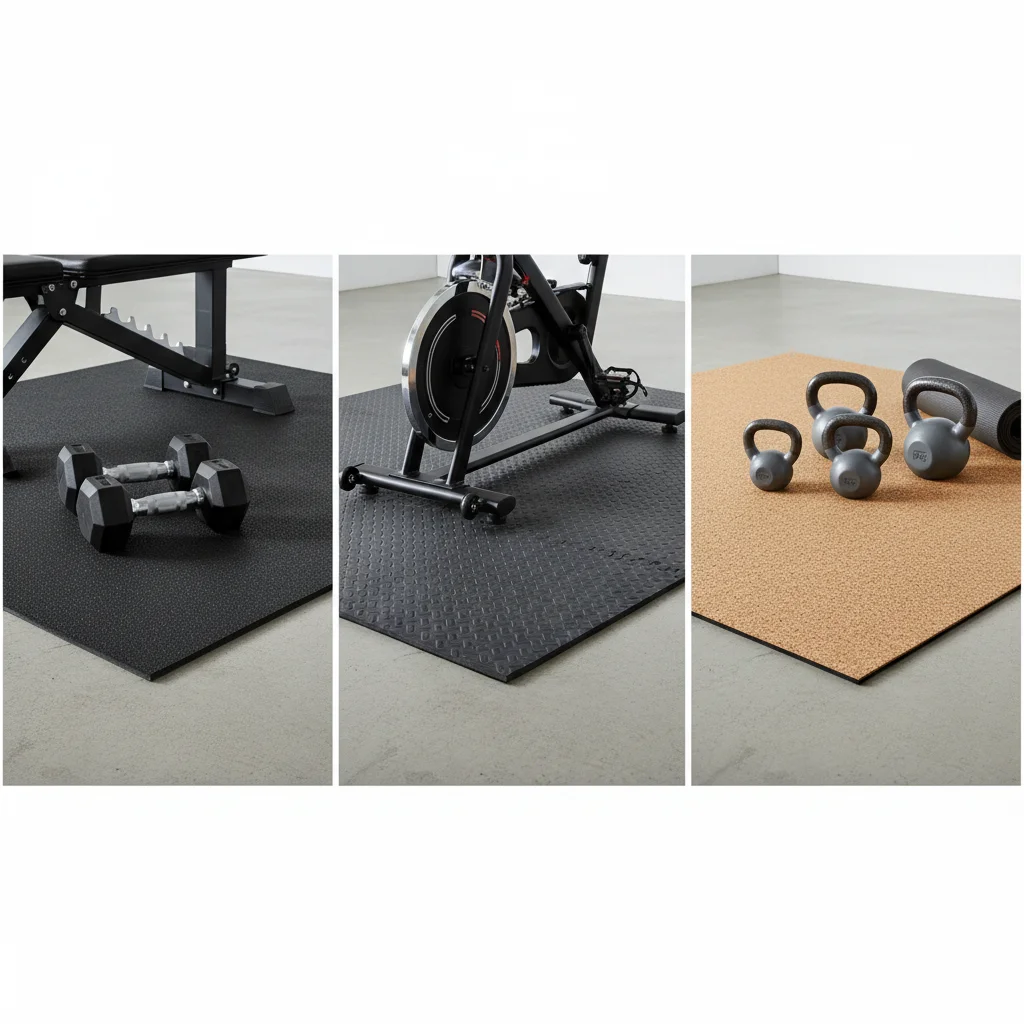
Choosing the right home gym flooring is crucial for protecting your subfloor, reducing noise, and providing a stable workout surface. The three best materials for home gym flooring that effectively prevent damage are rubber, foam, and turf.
Rubber Flooring: Durability and Impact Absorption
Rubber flooring is widely considered the gold standard for home gyms due to its exceptional durability and impact absorption properties. It’s ideal for heavy lifting areas, as it can withstand dropped weights without damaging the subfloor or the weights themselves. Rubber also offers excellent grip, reducing the risk of slips and falls during intense workouts. It comes in various forms, including interlocking tiles, rolls, and mats, allowing for flexible installation to suit different gym layouts. For complete home gym library on this site.
When selecting rubber flooring, consider the thickness. For general workouts and light weights, 1/4-inch to 3/8-inch thickness is often sufficient. However, for powerlifting or areas where heavy dumbbells will be dropped, a thickness of 1/2-inch or more is recommended to provide adequate protection. The density of the rubber also plays a role in its effectiveness; higher density rubber offers better shock absorption and longevity.
Foam Flooring: Comfort and Versatility
Foam flooring, typically made from EVA (ethylene-vinyl acetate) foam, offers a comfortable and versatile option for home gyms. It’s lighter and softer than rubber, making it an excellent choice for bodyweight exercises, yoga, Pilates, and activities where cushioning is prioritized over heavy impact protection. Foam tiles are easy to install and can be quickly reconfigured or stored away when not in use, making them ideal for multi-purpose rooms.
While foam provides good cushioning, it’s not as durable as rubber for areas with heavy equipment or dropped weights. It can dent or tear under extreme stress. However, for lighter workouts and general fitness, foam offers a cost-effective solution that still protects your floors from scratches and minor impacts. Look for high-density foam for better resilience and longevity.
Turf Flooring: Agility and Sled Work
|
Our Picks for the Best Home Gym in 2026
As an Amazon Associate I earn from qualifying purchases.
|
||
| Num | Product | Action |
|---|---|---|
| 1 | Adjustable Ropeless Battle Ropes for Home Gym for Men & Women,Adjustable Weights Cordless Battle Ropes with Storage Bag,Multifunctional Strength Training for Home & Gym |

|
| 2 | TRX All-In-One Home Gym System – Complete Suspension Training Kit for Strength Training, HIIT & Full-Body Workouts at Home or Outdoors, Includes Indoor & Outdoor Anchors |
|
| 3 | Resistance Bands for Working Out, 5-Pack Elastic Loop Exercise Bands for Strength Training Stretching, Home Gym Equipment for Pilates Yoga Physical Therapy, Leg Glute Arm Workout Kit for Women Men |
|
| 4 | VINSGUIR Ab Roller Wheel, Abs & Core Workout Equipment for Home Gym with Knee Pad Accessories, Abdominal Wheel for Full-body Strength Training |
|
| 5 | MQRW Push Up Board,Home Gym,Portable Exercise Equipment,Pilates Bar and 20 Fitness Accessories with Resistance Bands and Ab Roller Wheel,Full Body Workout at Home |
|
| 6 | Adjustable dumbbell set,20/35/45/55/70/90lbs Free Weights set with upgraded nut, 5 in 1 Weight Set Used as Kettlebells, Barbell, Push up Stand, Fitness Exercise for Home Gym Suitable Men/Women |
|
| 7 | Sunny Health & Fitness Mini Stepper for Exercise at Home, Stair Step Workout Machine with Resistance Band and Over 300lb Weight Capacity, Optional Twist Motion and Free SunnyFit App Connection |
|
| 8 | Yoleo Adjustable Weight Bench for Full Body Workout; Foldable Bench Press Bench of Home Gym Strength Training; Incline Decline Flat Utility Workout Bench with Quick Folding& Fast Adjustment (Black) |
|
| 9 | Ally Peaks Pull Up Bar for Doorway | Thickened Steel Max Limit 440 lbs Upper Body Fitness Workout Bar| Multi-Grip Strength for Doorway | Indoor Chin-Up Bar Fitness Trainer for Home Gym Portable |
|
| 10 | 6-Tier Home Gym Storage Rack with Wheels, Dumbbell Weight Rack and Yoga Mat Organizer, Multi-Purpose Gym Equipment Storage Stand for Home Gym Accessories |
|
Turf flooring, often seen in professional training facilities, is gaining popularity in home gyms, particularly for functional training and agility work. It provides a low-friction surface that is excellent for sled pushes, sprints, and various plyometric exercises. Turf protects the subfloor from scuffs and scratches while offering a unique aesthetic that can motivate dynamic workouts.
Unlike rubber or foam, turf isn’t designed for heavy weight drops, but it excels in providing a consistent surface for movement-based exercises. It’s also relatively easy to clean and maintain. When choosing turf, consider the pile height and density; a shorter, denser pile is generally better for gym use as it offers more stability and durability.
Key Considerations for Home Gym Flooring
Beyond the material type, several factors should influence your flooring decision. The specific types of exercises you plan to do will dictate the required level of protection and cushioning. For instance, a gym focused on Olympic lifting will need much thicker, denser rubber than one primarily used for cardio and bodyweight exercises. The size of your gym space and your budget are also important. Interlocking tiles offer flexibility for custom layouts, while rolls are great for covering large areas seamlessly.
- Assess your workout intensity and equipment weight.
- Measure your space accurately to minimize waste.
- Consider noise reduction properties, especially in shared living spaces.
- Evaluate ease of cleaning and maintenance for hygiene.
- Factor in your budget for initial purchase and potential installation.
Proper installation is key to maximizing the benefits of your chosen flooring. Ensure the subfloor is clean, dry, and level before laying down any material. For rubber rolls, allowing them to acclimate to the room temperature can prevent curling. For interlocking tiles, a tight fit is essential to prevent shifting during workouts.
Maintaining Your Home Gym Flooring
Regardless of the material, regular maintenance will extend the life of your home gym flooring. Sweep or vacuum frequently to remove dust and debris that can cause abrasions. For rubber and foam, a damp mop with a mild, pH-neutral cleaner is usually sufficient. Avoid harsh chemicals that can degrade the material. For turf, occasional vacuuming and spot cleaning are recommended. Promptly address any spills to prevent staining or odors. Consistent care ensures your flooring continues to protect your home and support your fitness journey for years to come.

I finally pulled the trigger on rubber interlocking tiles after reading about them here, and I’m so glad I did. My garage gym used to echo every time I dropped a dumbbell, and now it’s so much quieter. Plus, I don’t have to worry about cracking the concrete anymore. The installation was pretty straightforward too.
I went with the foam tiles for my yoga and bodyweight area, and they’re okay. They definitely make floor exercises more comfortable, but I wish they were a bit denser. Sometimes my feet sink in a little during more dynamic movements. Good for the price though, and easy to clean.
The turf suggestion for sled pushes was a game-changer! I never considered it for a home gym, but it makes so much sense. I sectioned off a small area in my basement, and it’s perfect for those kinds of workouts. It really protects the floor underneath and gives a good grip.
I was debating between different thicknesses for rubber flooring, and the advice on 1/2-inch for heavy lifting was spot on. My power rack area feels super stable, and I’m not stressing about my subfloor at all. It’s a solid investment for anyone serious about their home gym.