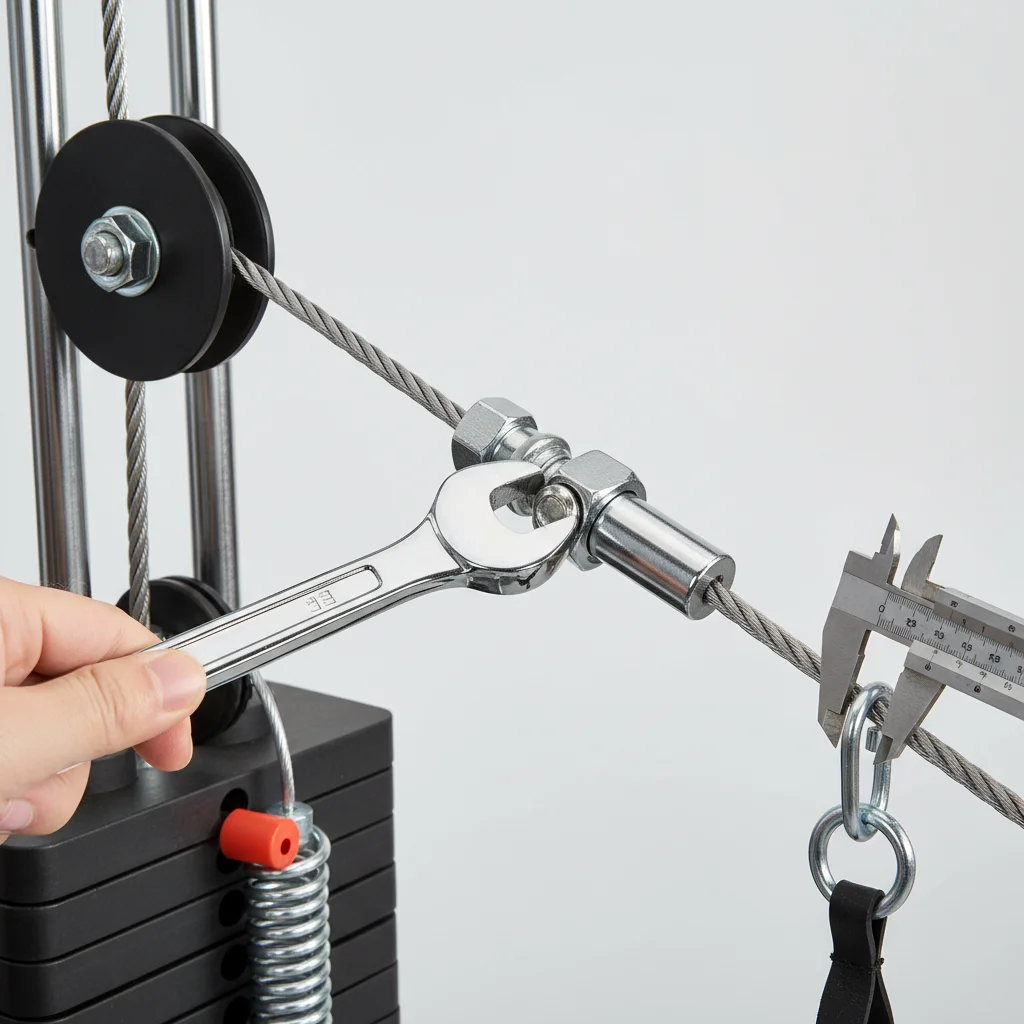
Adjusting home gym cable tension is crucial for both safety and workout effectiveness. You should adjust your home gym cable tension at least once every three months, or immediately if you notice any slack, sticking, or unusual resistance during your exercises. Proper tension ensures smooth operation, prevents premature wear on components, and provides consistent resistance for your muscles.
Why Cable Tension Matters for Your Workouts
Correct cable tension directly impacts the quality and safety of your home gym workouts. If cables are too loose, they can slip off pulleys, create jerky movements, and reduce the effective resistance, making exercises less challenging and potentially dangerous. Conversely, overly tight cables can strain the pulley system, accelerate wear on the cables themselves, and make movements feel stiff or restricted. Maintaining the right tension ensures that the resistance you select is the resistance you actually get, leading to more effective muscle engagement and better results. For compare top home gym on this site.
Beyond performance, proper tension is a key factor in the longevity of your equipment. Cables that are consistently too loose or too tight will wear out faster, requiring more frequent replacements. This can lead to unexpected downtime for your gym and additional costs. Regular checks and adjustments are a simple preventative measure that can save you time and money in the long run.
Identifying the Need for Tension Adjustment
Several indicators suggest it’s time to adjust your home gym cable tension. The most obvious sign is visible slack in the cable when no weight is loaded. You might also notice a delay in resistance when starting an exercise, or a feeling of ‘give’ before the weight stack engages. Audible cues, such as rattling or grinding noises from the pulleys, can also point to improper tension. Another common sign is uneven resistance throughout the range of motion, where some parts of the movement feel easier or harder than others. Pay close attention to how the cable moves through the pulleys; it should glide smoothly without catching or rubbing.
Step-by-Step Guide to Adjusting Cable Tension
|
Our Picks for the Best Home Gym in 2026
As an Amazon Associate I earn from qualifying purchases.
|
||
| Num | Product | Action |
|---|---|---|
| 1 | Yoleo Adjustable Weight Bench for Full Body Workout; Foldable Bench Press Bench of Home Gym Strength Training; Incline Decline Flat Utility Workout Bench with Quick Folding& Fast Adjustment (Black) |

|
| 2 | Ally Peaks Pull Up Bar for Doorway | Thickened Steel Max Limit 440 lbs Upper Body Fitness Workout Bar| Multi-Grip Strength for Doorway | Indoor Chin-Up Bar Fitness Trainer for Home Gym Portable |
|
| 3 | Sunny Health & Fitness Mini Stepper for Exercise at Home, Stair Step Workout Machine with Resistance Band and Over 300lb Weight Capacity, Optional Twist Motion and Free SunnyFit App Connection |
|
| 4 | Adjustable Ropeless Battle Ropes for Home Gym for Men & Women,Adjustable Weights Cordless Battle Ropes with Storage Bag,Multifunctional Strength Training for Home & Gym |
|
| 5 | VINSGUIR Ab Roller Wheel, Abs & Core Workout Equipment for Home Gym with Knee Pad Accessories, Abdominal Wheel for Full-body Strength Training |
|
| 6 | 6-Tier Home Gym Storage Rack with Wheels, Dumbbell Weight Rack and Yoga Mat Organizer, Multi-Purpose Gym Equipment Storage Stand for Home Gym Accessories |
|
| 7 | Adjustable dumbbell set,20/35/45/55/70/90lbs Free Weights set with upgraded nut, 5 in 1 Weight Set Used as Kettlebells, Barbell, Push up Stand, Fitness Exercise for Home Gym Suitable Men/Women |
|
| 8 | MQRW Push Up Board,Home Gym,Portable Exercise Equipment,Pilates Bar and 20 Fitness Accessories with Resistance Bands and Ab Roller Wheel,Full Body Workout at Home |
|
| 9 | Resistance Bands for Working Out, 5-Pack Elastic Loop Exercise Bands for Strength Training Stretching, Home Gym Equipment for Pilates Yoga Physical Therapy, Leg Glute Arm Workout Kit for Women Men |
|
| 10 | TRX All-In-One Home Gym System – Complete Suspension Training Kit for Strength Training, HIIT & Full-Body Workouts at Home or Outdoors, Includes Indoor & Outdoor Anchors |
|
Adjusting cable tension is typically a straightforward process, though it can vary slightly depending on your specific home gym model. Always consult your equipment’s user manual first. Generally, you’ll need a set of wrenches or an Allen key. Locate the tensioning mechanism, which is often found near the top or bottom of the cable run, or where the cable attaches to the weight stack or a fixed point. Loosen any locking nuts, then turn the adjustment bolt or screw to either tighten or loosen the cable. A good starting point is to remove all visible slack without making the cable feel overly taut. Once adjusted, re-tighten any locking nuts securely. Test the movement with a light weight to ensure smooth operation before increasing the load.
- Inspect cables for visible slack or bowing.
- Locate the primary tension adjustment points.
- Use appropriate tools (wrenches, Allen keys) to loosen locking nuts.
- Turn the adjustment bolt clockwise to tighten, counter-clockwise to loosen.
- Ensure the cable is taut but not overly strained.
- Securely re-tighten all locking nuts.
Common Mistakes to Avoid During Adjustment
When adjusting home gym cable tension, several common mistakes can lead to further issues. One frequent error is over-tightening the cables, which puts excessive stress on the pulleys, bearings, and the cable itself, leading to premature failure. Conversely, not tightening enough leaves residual slack, negating the purpose of the adjustment. Another mistake is neglecting to re-tighten locking nuts after making an adjustment; this can cause the tension to loosen again over time, or even lead to components coming undone during use. Always ensure the equipment is unloaded before making adjustments to prevent injury or damage. Finally, don’t ignore the manufacturer’s guidelines; attempting to adjust tension in a way not recommended by the manual can void warranties and create unsafe conditions.
Maintaining Optimal Cable Tension Over Time
Maintaining optimal cable tension is an ongoing process that requires regular attention. Beyond the initial adjustment, incorporate tension checks into your routine home gym maintenance schedule. A quick visual inspection before each workout can catch minor issues before they become major problems. Periodically, perform a more thorough check, perhaps monthly, to ensure all cables are running smoothly and have the correct tension. Keep the cables and pulleys clean and free of debris, as dirt can interfere with smooth operation and affect perceived tension. Lubricating the pulleys as recommended by your manufacturer can also contribute to consistent cable performance. By being proactive, you can ensure your home gym remains safe, effective, and durable for years to come.

This was a really helpful guide. I had noticed some unusual resistance on my cable crossover machine and couldn’t figure out why. Turns out my cables were too tight! A quick adjustment made a huge improvement, and now my workouts feel much more fluid. Wish I’d known this sooner.
My home gym’s cables were definitely too loose, causing them to slip off the pulleys sometimes. This post was a lifesaver! I followed the steps to get the right tension, and now my bicep curls and tricep extensions have consistent resistance. It feels much safer and more effective now.
I tried to adjust the tension on my functional trainer after reading this, but it was a bit more complicated than I expected for my specific model. The general tips about preventing premature wear on components were good, but I still had to look up a separate video for my exact machine. It’s definitely important though.
I used to just ignore the cables on my multi-station gym until I read about how important it is for safety. After following the advice here to check them every three months, my lat pulldowns feel so much smoother. It’s amazing what a difference proper tension makes, no more jerky movements.