Consistent maintenance is crucial for the longevity and optimal performance of your home gym equipment, preventing wear and tear, extending its lifespan, and ensuring safe, effective workouts. Without regular care, even high-quality equipment can degrade, leading to breakdowns and costly repairs. This guide provides essential maintenance tips to integrate into your fitness routine, helping you focus on building strength rather than fixing machines.
Understanding Your Home Gym System
Proper maintenance is about prevention, safeguarding your investment, ensuring workout safety, and preserving equipment functionality. Your home gym likely includes multi-station machines with complex cable systems, weight stacks, free weights like dumbbells and barbells, and cardio equipment such as treadmills or ellipticals. Each type has specific needs, but consistent maintenance extends equipment life, reduces costly repairs, and guarantees a high-quality workout environment.
Daily and Weekly Maintenance Checks
Establishing a routine for maintaining your home gym is fundamental to its longevity and your safety. Small, consistent efforts prevent minor issues from escalating into major problems.
Daily Quick Checks: Keep It Clean and Tidy
After each workout, take a few minutes for quick cleaning and inspection. Sweat, dust, and chalk are major enemies of fitness equipment, leading to corrosion and buildup over time.
- Wipe Down Equipment After Use: Use a damp cloth with a mild, gym-safe cleaning solution or disinfectant wipes to clean all high-touch areas, including handles, seats, and any surfaces where sweat accumulates. This prevents bacterial growth and corrosion. Avoid harsh chemicals like bleach, which can damage surfaces and reduce equipment lifespan.
- Inspect for Loose Hardware: Briefly check visible screws, bolts, and fasteners. While you don’t need to tighten them daily, being aware of any loose parts can help you address them during your weekly or monthly checks.
Weekly Deep Dives: A More Thorough Inspection
Once a week, dedicate time for a more thorough cleaning and inspection to catch issues before they become problematic.
- Vacuum Around and Underneath Equipment: Dust and debris can accumulate, especially under treadmills or around weight stacks, affecting performance and motor health. A weekly vacuum helps keep these areas clean.
- Inspect Cables, Pulleys, and Belts: Look for any signs of fraying, kinks, or damage in cables. Ensure pulleys move freely and quietly. For treadmills, check the belt tension and alignment.
- Lubricate Moving Parts (as needed): While full lubrication is often monthly, a quick check for dry or squeaky pivot points can indicate where early attention might be needed. Use a silicone-based lubricant or one recommended by the manufacturer. Apply sparingly to a rag, then wipe the moving parts to avoid over-lubrication and dust attraction.
- Clean and Condition Upholstery: Use a mild cleaner designed for upholstery to keep seats and pads clean and supple, preventing cracks and wear.
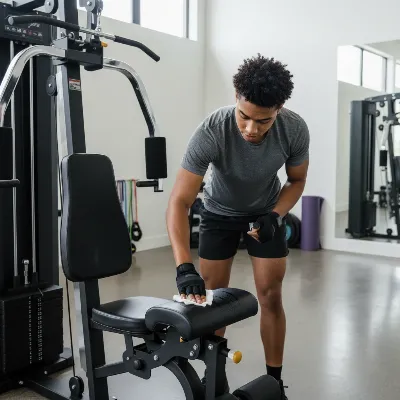 A person wiping down a home gym multi-station machine after a workout, emphasizing daily cleaning routines with a disinfectant wipe in a well-lit home gym setting.
Specific Maintenance for Different Home Gym Equipment Types
Different types of home gym equipment have unique maintenance needs that, when addressed, significantly contribute to their longevity and safe operation.
Free Weights (Dumbbells, Barbells, Plates): Simple Care for Heavy Lifters
|
Our Picks for the Best Home Gym in 2026
As an Amazon Associate I earn from qualifying purchases.
|
||
| Num | Product | Action |
|---|---|---|
| 1 | TRX All-In-One Home Gym System – Complete Suspension Training Kit for Strength Training, HIIT & Full-Body Workouts at Home or Outdoors, Includes Indoor & Outdoor Anchors |

|
| 2 | Resistance Bands for Working Out, 5-Pack Elastic Loop Exercise Bands for Strength Training Stretching, Home Gym Equipment for Pilates Yoga Physical Therapy, Leg Glute Arm Workout Kit for Women Men |
|
| 3 | 6-Tier Home Gym Storage Rack with Wheels, Dumbbell Weight Rack and Yoga Mat Organizer, Multi-Purpose Gym Equipment Storage Stand for Home Gym Accessories |
|
| 4 | Ally Peaks Pull Up Bar for Doorway | Thickened Steel Max Limit 440 lbs Upper Body Fitness Workout Bar| Multi-Grip Strength for Doorway | Indoor Chin-Up Bar Fitness Trainer for Home Gym Portable |
|
| 5 | VINSGUIR Ab Roller Wheel, Abs & Core Workout Equipment for Home Gym with Knee Pad Accessories, Abdominal Wheel for Full-body Strength Training |
|
| 6 | Sunny Health & Fitness Mini Stepper for Exercise at Home, Stair Step Workout Machine with Resistance Band and Over 300lb Weight Capacity, Optional Twist Motion and Free SunnyFit App Connection |
|
| 7 | Adjustable Ropeless Battle Ropes for Home Gym for Men & Women,Adjustable Weights Cordless Battle Ropes with Storage Bag,Multifunctional Strength Training for Home & Gym |
|
| 8 | Adjustable dumbbell set,20/35/45/55/70/90lbs Free Weights set with upgraded nut, 5 in 1 Weight Set Used as Kettlebells, Barbell, Push up Stand, Fitness Exercise for Home Gym Suitable Men/Women |
|
| 9 | Yoleo Adjustable Weight Bench for Full Body Workout; Foldable Bench Press Bench of Home Gym Strength Training; Incline Decline Flat Utility Workout Bench with Quick Folding& Fast Adjustment (Black) |
|
| 10 | MQRW Push Up Board,Home Gym,Portable Exercise Equipment,Pilates Bar and 20 Fitness Accessories with Resistance Bands and Ab Roller Wheel,Full Body Workout at Home |
|
Free weights are often perceived as indestructible, but they benefit greatly from regular care to prevent rust and maintain hygiene.
- Cleaning and Rust Prevention: Wipe down barbells, dumbbells, and weight plates regularly with a damp cloth to remove sweat and chalk, which can accelerate corrosion. For knurled barbells, a soft brush can help clean crevices. If rust appears, address it promptly with a rust remover and then protect the surface.
- Proper Storage: Store dumbbells and kettlebells on racks to prevent scratches and dings, and to keep your workout space organized and safe.
Multi-Station Gyms: Focus on Moving Components
These complex machines rely on many moving parts that require regular attention.
- Cable and Pulley Maintenance: Cables should be inspected for fraying or kinking. If a cable shows significant wear, it needs replacement. Lubricate cables where they move through pulleys with a silicone-based lubricant monthly to ensure smooth operation and prevent wear.
- Upholstery Care: Clean and condition seats and pads to maintain comfort and durability. This prevents cracks and extends the life of the padding.
- Pin and Selector Maintenance: Ensure all selector pins move freely and engage properly. A quick spray of silicone lubricant can help if they become stiff. Also, check all safety keys and stops to ensure they are present and in good working order.
Cardio Equipment (Treadmills, Bikes, Ellipticals): Keep Them Rolling Smoothly
Cardio machines have specific needs related to their motorized or resistance-based components.
- Treadmill Belt Lubrication and Tension: Treadmill belts require lubrication at manufacturer-recommended intervals to reduce friction and extend motor life. The frequency depends on usage (e.g., every 2-8 months). Also, check and adjust belt tension to ensure smooth operation and prevent slipping. Vacuuming around and under the treadmill is vital to keep dust and dirt from getting into the motor.
- Bike Chain/Belt Inspection: For stationary bikes, check the chain or belt for proper tension and signs of wear. Lubricate chains if present.
- Elliptical Joint Lubrication: Ellipticals have multiple pivot points that can benefit from silicone-based lubrication to prevent squeaking and ensure fluid motion.
- Cleaning Display Screens: Use a soft, dry cloth or a screen cleaner to wipe down electronic displays, avoiding direct sprays.
Troubleshooting Common Home Gym Issues
Even with regular maintenance, minor issues can arise. Knowing how to troubleshoot common problems can save you time and prevent unnecessary repairs.
- Squeaks and Noises: The most frequent complaint. Often caused by loose bolts or dry moving parts.
- Solution: Identify the source by gently wiggling parts. Tighten any loose bolts or screws. Lubricate pivot points, bearings, guide rods, and other moving components with a suitable silicone-based lubricant. Worn-out bearings or misaligned belts can also cause squeaks and may require professional attention if lubrication doesn’t solve it.
- > “Squeaky sounds are often a sign that something needs a bit of attention, and acting early can help prevent more serious wear and tear down the line.”
- Loose Connections: Wobbly benches or racks can be dangerous.
- Solution: Regularly check and tighten all frame bolts and connections. Even small movements during workouts can shake bolts loose over time.
- Decreased Resistance: If a machine feels easier than it should, or resistance is uneven.
- Solution: For multi-gyms, inspect cables for fraying or stretching, and ensure they are properly routed through pulleys. For cardio machines, check belt tension or inspect resistance mechanisms (e.g., brake pads on bikes). Calibration might be needed for advanced machines.
- Wear and Tear Signs: Cracks, fraying, or discoloration.
- Solution: Regularly inspect upholstery for cracks, cables for fraying, and metal parts for signs of rust or corrosion. Address these issues promptly to prevent further damage. Replace worn-out components like frayed cables or cracked pads immediately for safety.
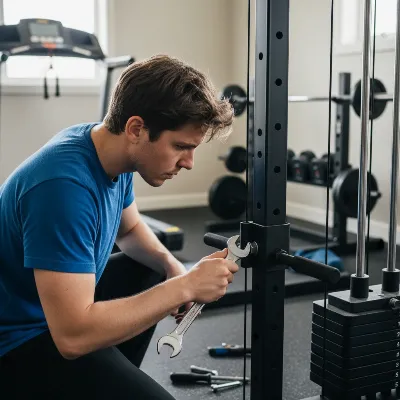 A person inspecting a home gym multi-station machine for a squeaking noise, holding a wrench and looking at a pivot point in a focused manner.
Essential Tools and Products for Home Gym Maintenance
Having the right tools and cleaning supplies on hand makes maintenance tasks much simpler and more effective.
- Cleaning Solutions:
- Mild Soap and Water: Effective for general cleaning of surfaces.
- Disinfectant Wipes/Spray: Ideal for post-workout sanitization of high-touch areas. Look for gym-safe, alcohol-free, non-corrosive options. A DIY solution of 50/50 hydrogen peroxide and water can also be effective.
- Microfiber Cloths: Excellent for wiping down equipment without scratching surfaces and for applying lubricants.
- Soft Brushes/Compressed Air: Useful for cleaning hard-to-reach areas, vents, and crevices where dust accumulates.
- Lubricants:
- Silicone-Based Lubricant: Essential for cables, pulleys, guide rods, and pivot points. Many manufacturers recommend this type. Apply sparingly to a rag and then wipe the moving parts.
- Grease/Petroleum Jelly: Can be used for specific joints or threaded parts as recommended by the manufacturer.
- Avoid WD-40 or harsh petroleum-based lubricants unless specified by the manufacturer, as they can degrade plastic and attract dust.
- Basic Tool Kit:
- Wrenches (Adjustable and Hex/Allen Key Set): For tightening bolts and fasteners.
- Screwdrivers (Phillips and Flathead): For various adjustments.
- Vacuum Cleaner: Essential for removing dust and debris, especially around cardio equipment.
- Protective Mats: While not a tool, rubber flooring or mats protect your actual floor from dropped weights and help dampen noise, reducing wear on both your equipment and your home.
Conclusion
Maintaining your home gym system doesn’t have to be a daunting task. By incorporating a few simple, consistent habits into your routine, you can significantly prolong the life of your equipment, ensure its safe operation, and keep your workout space hygienic and enjoyable. From daily wipe-downs and weekly inspections to monthly lubrication and addressing minor issues promptly, every step contributes to preserving your investment. A well-maintained home gym performs better, lasts longer, and provides a safer, more motivating environment for you to crush your fitness goals. What small maintenance task will you commit to today to ensure your home gym continues to support your fitness journey for years to come?
Frequently Asked Questions
How often should I lubricate my home gym equipment?
For regular use, it’s generally recommended to lubricate the moving parts of your home gym equipment once a month. However, if you use your gym intensely or notice any squeaking or stiffness, you may need to lubricate more frequently to ensure optimal performance and longevity. Always refer to your equipment’s manufacturer guidelines for specific lubrication schedules.
Can I use any cleaning product on my home gym equipment?
No, it’s crucial to use gym-safe cleaning agents. Harsh chemicals, such as bleach or abrasive cleaners, can damage surfaces, coatings, and plastic components, reducing your equipment’s lifespan. Opt for mild soapy water, disinfectant wipes, or a 50/50 mixture of hydrogen peroxide and water, and always apply to a cloth first rather than directly spraying the equipment.
What should I do if my home gym equipment starts making strange noises?
Strange noises like squeaking, grinding, or knocking are usually warning signs. First, unplug any powered equipment. Then, check for loose bolts or screws and tighten them. Lubricate any dry moving parts like pivot points, cables, or guide rods. If the noise persists, it could indicate worn-out bearings, misaligned belts, or damaged components that may require professional inspection or replacement.
Is professional maintenance necessary for a home gym?
For most routine tasks like cleaning, tightening, and lubricating, you can manage home gym maintenance yourself. However, for complex issues, major repairs, or for advanced machines with electronic components that require calibration, professional servicing can ensure long-term reliability and safety. Consider scheduling professional maintenance every few years, especially for high-value equipment.
Frequently Asked Questions
How often should I lubricate my home gym equipment?
For regular use, it's generally recommended to lubricate the moving parts of your home gym equipment once a month. However, if you use your gym intensely or notice any squeaking or stiffness, you may need to lubricate more frequently to ensure optimal performance and longevity. Always refer to your equipment's manufacturer guidelines for specific lubrication schedules.
Can I use any cleaning product on my home gym equipment?
No, it's crucial to use gym-safe cleaning agents. Harsh chemicals, such as bleach or abrasive cleaners, can damage surfaces, coatings, and plastic components, reducing your equipment's lifespan. Opt for mild soapy water, disinfectant wipes, or a 50/50 mixture of hydrogen peroxide and water, and always apply to a cloth first rather than directly spraying the equipment.
What should I do if my home gym equipment starts making strange noises?
Strange noises like squeaking, grinding, or knocking are usually warning signs. First, unplug any powered equipment. Then, check for loose bolts or screws and tighten them. Lubricate any dry moving parts like pivot points, cables, or guide rods. If the noise persists, it could indicate worn-out bearings, misaligned belts, or damaged components that may require professional inspection or replacement.
Is professional maintenance necessary for a home gym?
For most routine tasks like cleaning, tightening, and lubricating, you can manage home gym maintenance yourself. However, for complex issues, major repairs, or for advanced machines with electronic components that require calibration, professional servicing can ensure long-term reliability and safety. Consider scheduling professional maintenance every few years, especially for high-value equipment.
What are the most important daily maintenance tasks for home gym equipment?
The most important daily maintenance tasks for home gym equipment include wiping down all high-touch surfaces with a gym-safe disinfectant after each use to prevent bacterial growth and corrosion. Additionally, a quick visual inspection for any loose hardware like screws or bolts can help identify potential issues early. These small efforts prevent minor problems from escalating.
How can I prevent rust on my free weights and barbells?
To prevent rust on free weights and barbells, regularly wipe them down with a damp cloth to remove sweat and chalk, which can accelerate corrosion. For knurled barbells, use a soft brush to clean crevices. Proper storage on racks also helps prevent scratches and dings that can expose metal to moisture, leading to rust.
Maintain Your Home Gym Equipment for Peak Performance
Follow these steps to ensure your home gym equipment remains in top condition, extending its lifespan and ensuring safe, effective workouts.
After each workout, wipe down all high-touch areas with a gym-safe cleaning solution or disinfectant wipes to remove sweat and prevent bacterial growth. Briefly inspect visible screws and bolts for any looseness, noting them for weekly attention.
Once a week, vacuum around and underneath equipment to remove dust and debris. Inspect cables, pulleys, and belts for signs of wear or damage. Check for dry or squeaky pivot points and lubricate them sparingly with a silicone-based lubricant if needed.
For free weights, clean regularly to prevent rust and store them on racks. For multi-station gyms, inspect and lubricate cables monthly, and clean upholstery. For cardio equipment, lubricate treadmill belts every 2-8 months, check belt tension, and lubricate elliptical joints.
If you hear squeaks, tighten loose bolts and lubricate moving parts. For wobbly equipment, check and tighten all frame connections. If resistance decreases, inspect cables or resistance mechanisms. Promptly replace any worn-out components like frayed cables or cracked pads for safety.
Keep mild soap, disinfectant wipes, microfiber cloths, and soft brushes for cleaning. Essential lubricants include silicone-based options for moving parts. A basic tool kit with wrenches and screwdrivers is vital for tightening. Protective mats also help preserve both your equipment and flooring.

Fantastic advice! I’ve always been pretty good about my equipment, but I never really thought about the importance of checking all the nuts and bolts for tightness regularly. My elliptical was making a slight squeak, and after going through it with a wrench, it’s silent again. This will definitely help extend the lifespan of my machines.
I appreciate the focus on preventing wear and tear, which is why I bought my home gym in the first place. However, I found the advice on free weights like dumbbells and barbells a bit basic. I was hoping for more advanced tips on rust prevention or specific storage solutions beyond just keeping them clean. Still, a decent refresher.
I’ve been neglecting my home gym for a while, and this guide was exactly what I needed. The tip about regularly checking and lubricating the cable systems on my multi-station machine was a game-changer. It’s so much smoother now, and I feel a lot safer using it. Definitely worth the few minutes it takes.
Good tips overall, especially the reminder to clean cardio equipment like my treadmill after every use. I used to just wipe it down occasionally, but now I’m more diligent about getting rid of sweat and dust. My only minor complaint is that I wish there was a bit more detail on specific lubricant brands to use for different components.